How to Choose the Right Scissor Lift for Your Warehouse: Multi-Scissor vs. Self-Propelled.
Multi-scissor lift tables are stationary or semi-portable hydraulic units designed for heavy lifting (up to 2,000+ kg) in compact spaces. Self-propelled scissor lifts are motorized platforms built for continuous worker mobility and elevated reach (up to 14+ metres) across large warehouse floors
Quick Answer
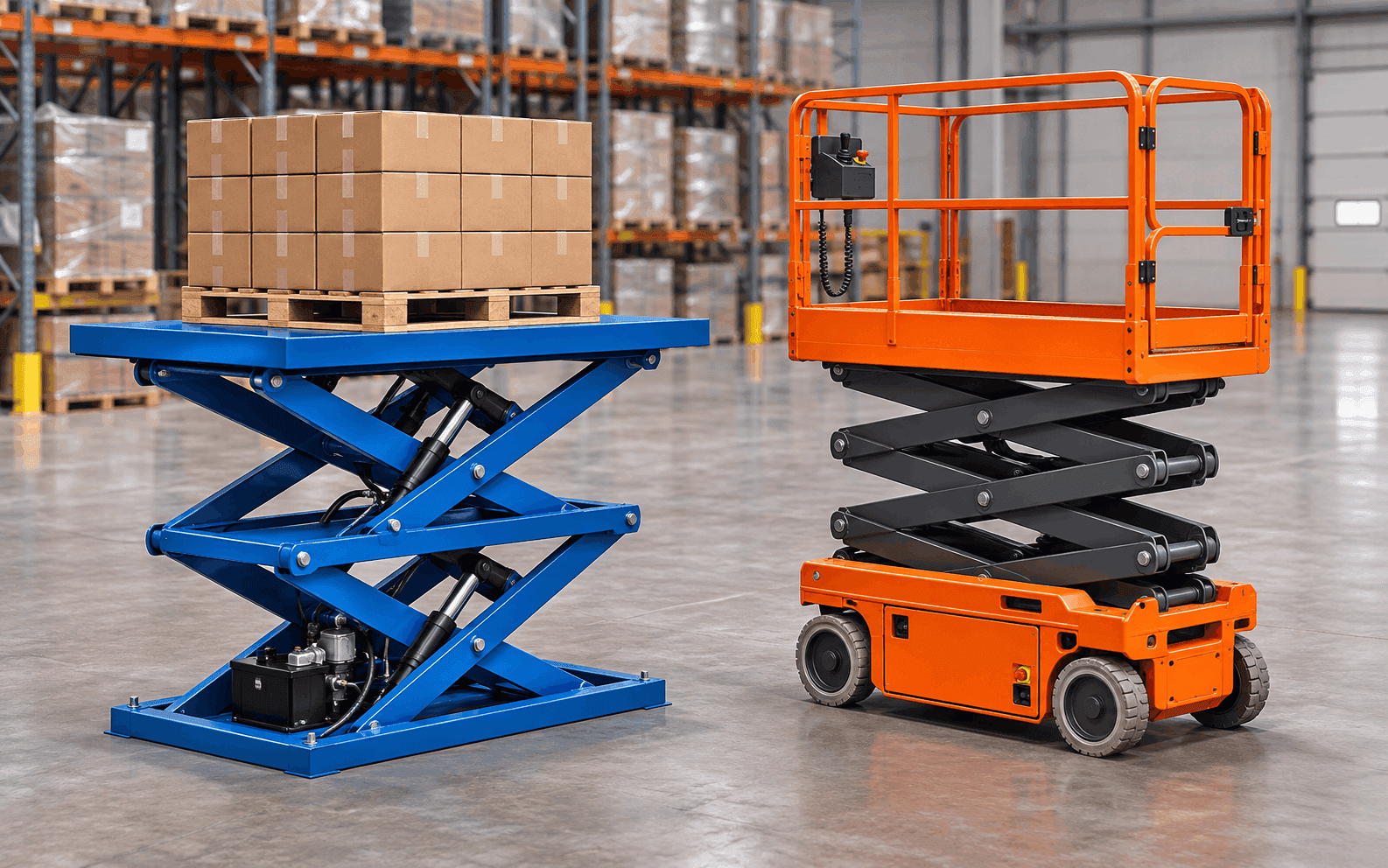
Multi-scissor lift tables are stationary or semi-portable hydraulic units designed for heavy lifting (up to 2,000+ kg) in compact spaces. Self-propelled scissor lifts are motorized platforms built for continuous worker mobility and elevated reach (up to 14+ metres) across large warehouse floors.
Choose Multi-Scissor for: heavy pallet loading, fixed assembly lines, and high-capacity static positioning.
Choose Self-Propelled for: racking maintenance, stock picking, and continuous multi-point facility tasks.
The Modern Warehouse Ergonomics Challenge
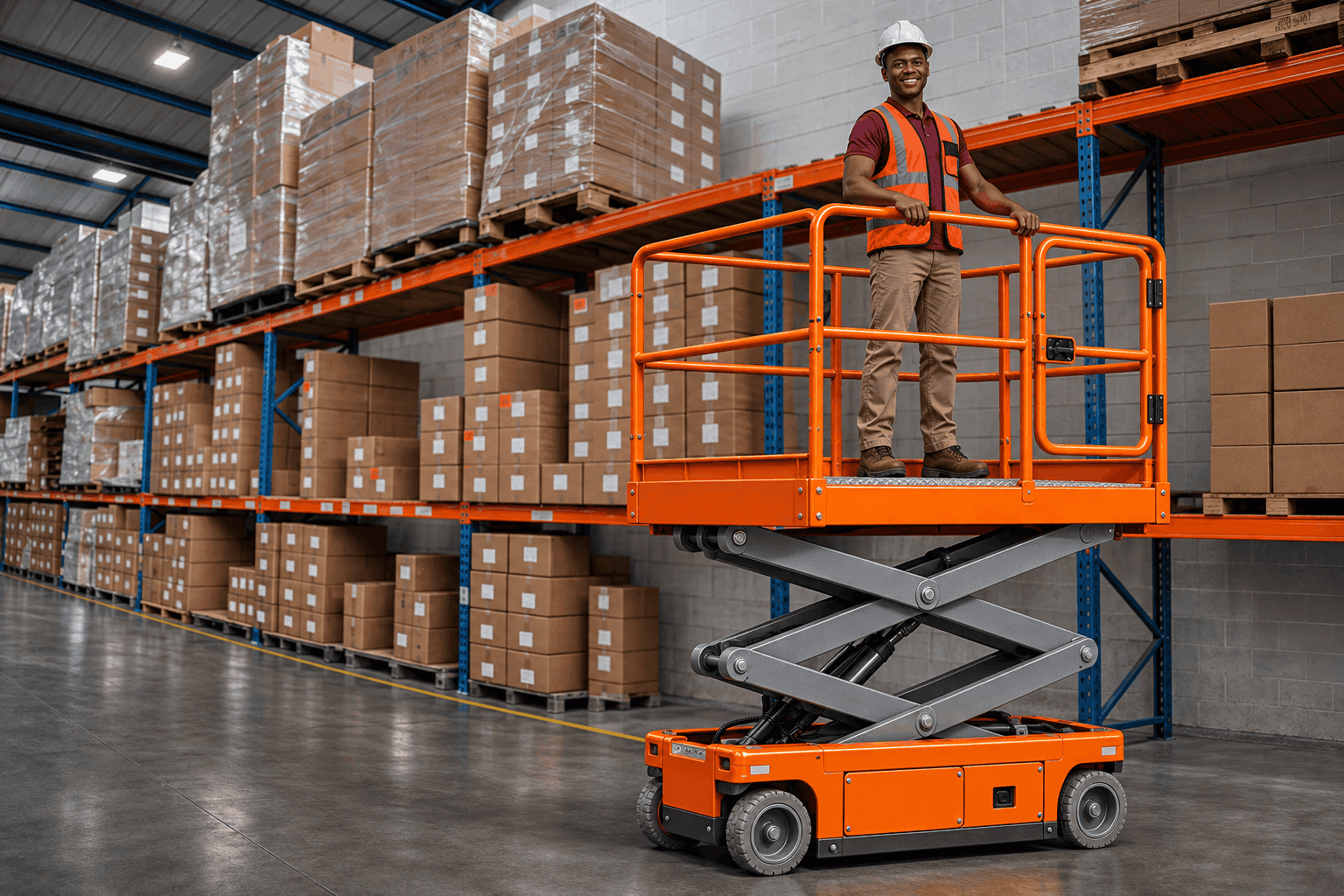
Industrial land in Gujarat, Maharashtra, and the NCR has only gotten more expensive, and that single fact is reshaping how warehouses are designed. When a facility can't expand its footprint, the only direction left to grow is up taller racking, higher mezzanines, and storage that reaches well past what a person can safely handle from the ground.
That verticalization creates a new set of problems. Manual material handling at height slows throughput and puts workers at real risk of strain injuries or falls. Under the Indian Factory Act (Section 28) and IS 13367 standards and any serious EHS programme repeated manual lifting at elevated levels simply isn't a sustainable way to run a warehouse. It also creates bottlenecks: every minute a worker spends manually staging a pallet or climbing to inspect a rack is a minute the line isn't moving
This is where specialized material handling equipment (MHE) earns its place on the capital budget not as a line-item cost, but as a throughput and safety multiplier. Scissor lifts, specifically, solve the vertical access problem in two fundamentally different ways, and picking the wrong one for your operation means paying for capability you'll never use while missing the one you actually need.
It's worth being direct about why this decision gets made poorly so often: most procurement teams compare scissor lifts on price and headline lift height alone, without mapping the equipment to the actual task cycle on their floor. A facility that mainly needs to stage heavy pallets at a fixed dock doesn't need a machine built for continuous elevated travel and a maintenance team covering acres of overhead racking gains nothing from a unit optimised purely for static load capacity. The right starting point isn't the spec sheet; it's the job the machine will actually do, every day, for years.
This guide breaks down that decision for warehouse managers, plant operations heads, and EHS officers, comparing Skega's two flagship solutions the Mobile Multi-Scissor Lift Table and the Self-Propelled Scissor Lift against the criteria that actually determine which one belongs on your floor.
The 4 Core Evaluation Criteria for Warehouse Managers
Before comparing specific machines, it helps to evaluate your operation against four variables. These four, more than brand or price, determine which category of scissor lift is right for your facility.
1. Load Capacity and Weight Distribution
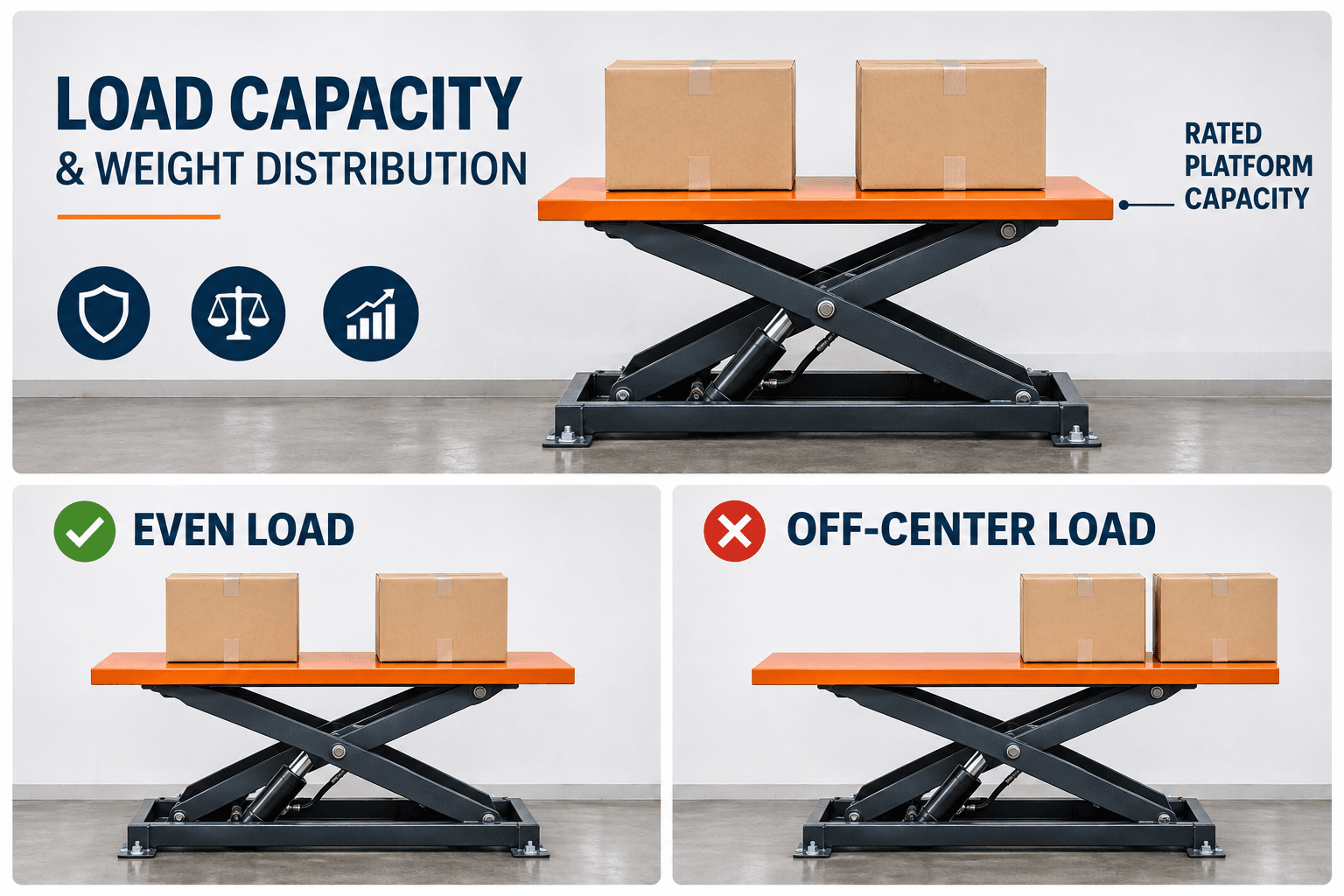
Start by understanding what you're actually lifting. A uniformly distributed load (UDL) like a full pallet of packaged goods spread evenly across a platform behaves very differently from a concentrated point load, such as a single heavy die or mold sitting on one section of the deck. Standard industrial load brackets for warehouse scissor lifts typically range from 500 kg up to 3,000+ kg, and getting this number wrong in either direction either under-specifies your equipment or wastes budget on unused capacity.
A practical way to sanity-check this: take your heaviest routine load, add a reasonable safety margin, and check that figure against the rated capacity at your required lift height, not just the machine's maximum capacity at ground level, since some units derate as they extend.
2. Max Elevation Height and Overhead Clearance
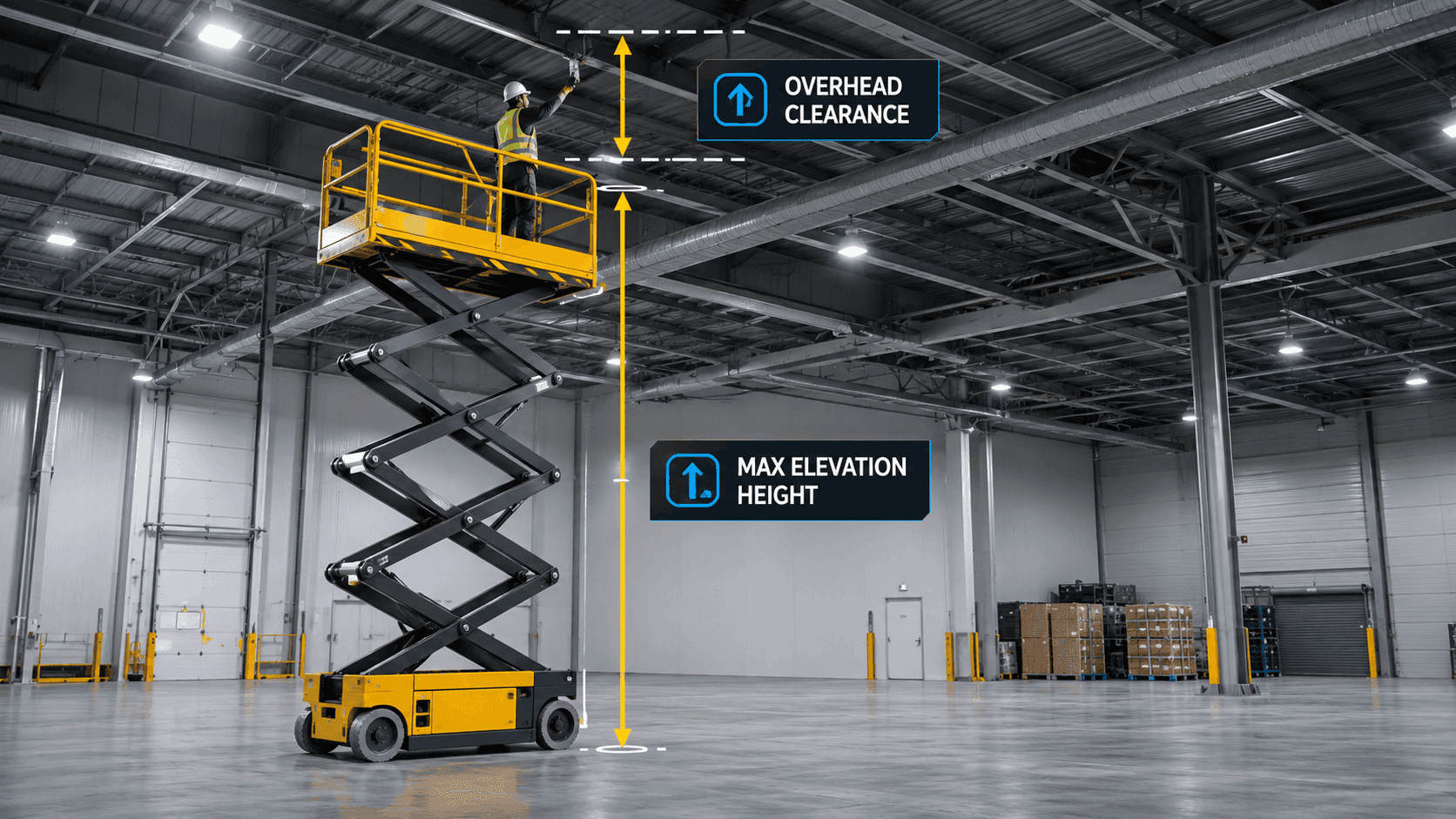
Two numbers matter here, not one: the collapsed height of the unit, and its maximum extended platform height. Collapsed height determines whether the lift can pass under existing racking, doorways, or mezzanine structures. Extended height needs to be checked against every overhead obstruction on-site HVAC ducting, sprinkler heads, light fixtures, and crane runways all reduce your effective working height, sometimes significantly.
It helps to physically walk the intended work area with a tape measure before finalising a spec, rather than relying on architectural drawings alone, retrofits, added ducting, and shelving changes rarely make it back onto the original plans.
3. Frequency of Movement and Operational Radius
Ask how often the unit needs to relocate. A stationary or point-A-to-point-B transfer task, say, feeding a single conveyor line has very different requirements from a job that demands continuous traversal across an entire facility floor. This single question does more to narrow your decision than any spec sheet.
As a rough rule of thumb: if the equipment will be repositioned more than a handful of times per shift, the labour cost of manually pushing and re-levelling a static unit adds up quickly, and that alone can justify the higher upfront cost of a self-propelled machine.
4. Operating Floor Space and Ground Conditions
Finally, assess the floor itself: turning radius clearance in your aisles, narrow-aisle compatibility, floor gradeability if there are any slopes or ramps, and floor point-load limits. A concentrated wheel load can exceed what a mezzanine or raised floor was engineered to handle, even when the total unit weight seems reasonable on paper.
If your facility runs narrow-aisle racking, measure the tightest turn the unit will need to make while carrying its rated load, not just its resting footprint; the loaded turning radius is almost always larger than what's printed on a brochure.
Deep Dive: Mobile Multi-Scissor Lift Tables
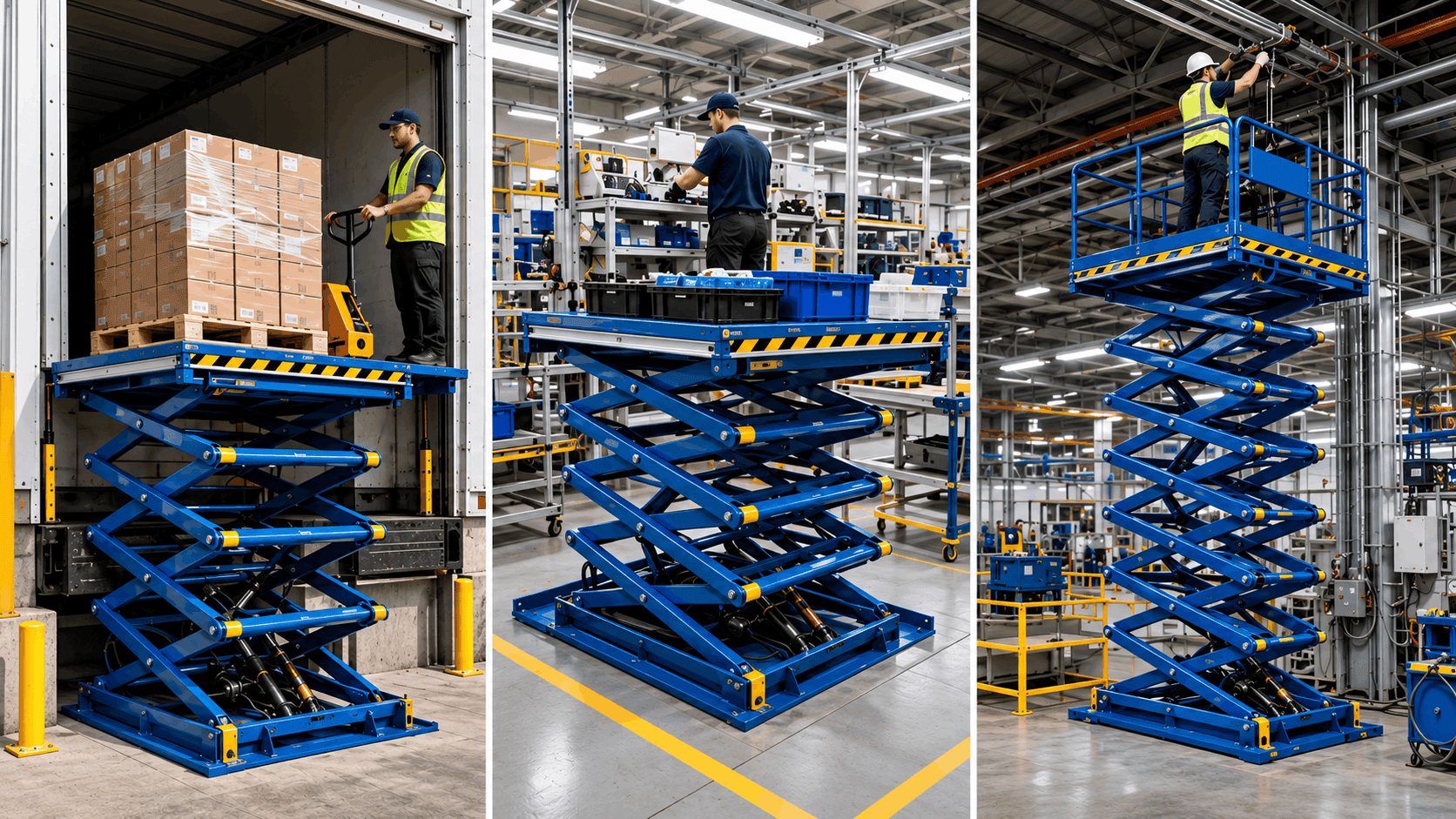
Engineering Anatomy and Mechanism
The defining feature of a multi-scissor lift table is its multi-stage stacked pantograph arm design with double, triple, or quad scissor arms stacked to achieve extreme vertical reach without widening the base frame. Each arm set shares the load, which is what allows these units to lift heavy weights to significant heights from a surprisingly compact footprint.
Power comes from a hydraulic cylinder configuration, available as a manual hydraulic foot pump for lighter-duty use, or an electro-hydraulic power pack for higher-frequency operations. The heavy-duty frame is built for stability under load rather than for speed or manoeuvrability, a deliberate engineering trade-off.
Key Advantages for Material Handling
- Industry-leading footprint-to-height ratio, which matters most in tight aisle layouts.
- Exceptional static load stability, ideal for precise pallet positioning and assembly work.
- Minimal maintenance requirements, since there are far fewer electronic drive components to service compared to a self-propelled unit.
That last point is worth dwelling on for plant operations heads planning maintenance budgets: a hydraulic system with fewer sensors, motors, and control boards generally means fewer failure points and simpler troubleshooting when something does go wrong, which is a real advantage in facilities running lean maintenance teams.
Technical Specifications Profile (Typical Skega Standards)
- Load capacities: 500 kg to 2,000 kg.
- Lifting heights: up to 4,000 mm – 6,000 mm.
- Power options: manual hydraulic foot pump, AC 3-phase electric, or DC battery power pack.
Ideal Industrial Use Cases
- Mezzanine floor material transfers.
- Conveyor system loading and unloading feeds.
- Heavy die and mold positioning in automotive and manufacturing plants.
- Stationary maintenance stations in pharmaceutical or textile facilities.
For facilities that need to move heavy, palletized loads to a fixed elevation repeatedly throughout the day, Skega's Mobile Multi-Scissor Lift Table range is engineered specifically around that job.
Deep Dive: Self-Propelled Scissor Lifts
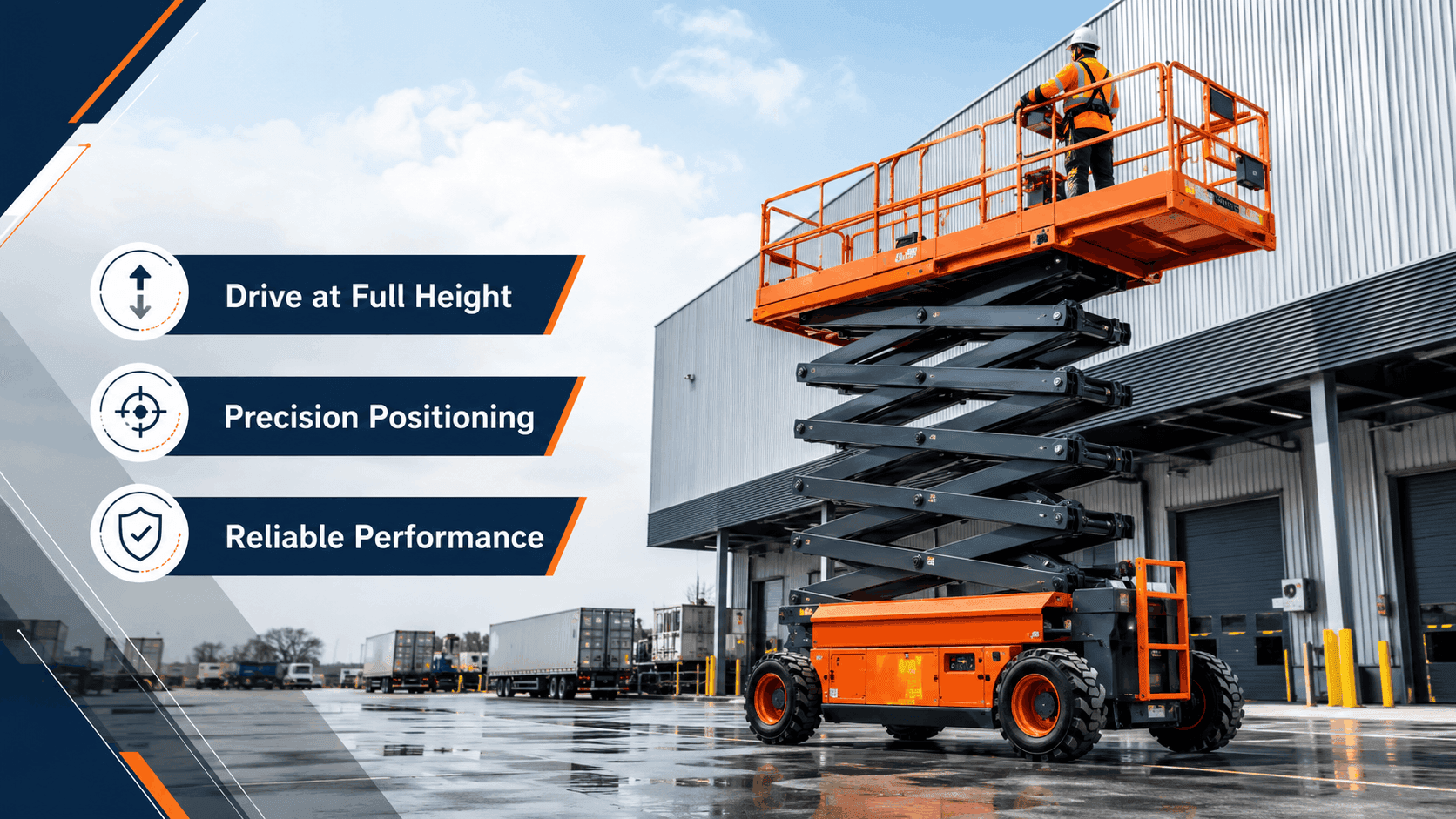
Engineering Anatomy and Drive Architecture
Self-propelled scissor lifts run on electric or hydraulic drive wheel motors, giving the operator full directional control directly from a joystick on the elevated platform control box. That's a fundamentally different design goal from the multi-scissor table. This machine is built to move while a person is working from height on it, not just to lift a static load.
Modern units add pothole protection systems that prevent a wheel drop from destabilizing the platform, roll-out deck extensions for reaching over fixed obstacles like racking or machinery, and automatic proportional steering that scales turning response to platform height for added stability.
Key Operational Advantages
- Drive-while-elevated capability, which eliminates the repeated cycle of lowering, stepping down, repositioning, and re-elevating a real time cost over an eight-hour shift.
- High manoeuvrability through long warehouse aisles and large manufacturing bays.
- Zero-emissions electric battery operation, which makes these units suitable for indoor cleanroom and food-grade environments where combustion equipment isn't an option.
This combination of mobility and clean operation is exactly why self-propelled lifts have become the default choice for facilities that combine warehousing with light manufacturing or food-grade processing; the same unit can move between zones without triggering air quality concerns that a combustion-powered alternative would raise.
Technical Specifications Profile (Typical Skega Standards)
- Working heights: 6 metres to 14+ metres.
- Platform capacity: 230 kg to 450 kg covering the operator, tools, and materials.
- Power system: deep-cycle industrial batteries with built-in auto-cut chargers.
Ideal Industrial Use Cases
- High-bay rack inspection and inventory stock maintenance.
- Overhead electrical, piping, and HVAC maintenance across large facility floors.
- Facility construction, lighting installation, and interior painting work.
For teams that need to cover ground at height inspecting racks, servicing overhead systems, or picking stock across a large floor plan, Skega's Self-Propelled Scissor Lift range is built around continuous elevated mobility rather than static load capacity.
Direct Comparison: Multi-Scissor vs. Self-Propelled
Both machine categories solve a vertical access problem, but they optimize for opposite priorities one for load, the other for mobility. Here's how they compare across the factors that actually drive a purchasing decision.
| Evaluation Feature | Mobile Multi-Scissor Lift Table | Self-Propelled Scissor Lift |
| Primary Mobility Type | Push-type / towable requires external push or towing when lowered | Full electric self-drive drivable from the platform while elevated |
| Max Lifting Height Range | Medium to high (stacked pantographs for compact height) | Very high up to 14+ metres working height |
| Load Capacity Range | High to very heavy up to 2,000 kg+ | Moderate, people-focused 230 kg to 450 kg for workers & tools |
| Operator Control Location | Base frame or tethered push-button/pendant box | Upper platform control box with proportional joystick |
| Primary Function | Heavy material vertical transfer & pallet positioning | Personnel elevation for active maintenance & installation work |
| Floor Gradeability | Flat, level industrial floors | Designed for flat indoor concrete; handles minor inclines (up to 25%) when stowed |
| Maintenance Profile | Low hydraulic seals, oil replacement, structural pivots | Medium battery bank upkeep, drive motor controllers, sensors |
| Best Use Case | Fixed loading docks, assembly line integration, pallet handling | Facility maintenance, warehouse inventory access, overhead repairs |
Engineering Notes from the Skega Design Team
Calculating Floor Load Limits
Wheel point-loads matter more than most buyers expect. A fully elevated self-propelled lift concentrates its entire weight plus operator, tools, and materials onto four relatively small rubber wheels. A multi-scissor table, by contrast, distributes that same weight across its full lower chassis. On raised floors, mezzanines, or older concrete slabs, this difference can be the deciding factor regardless of which unit otherwise fits the job better.
Safety Clearances and Tilt Interlocks
Every unit we spec includes tilt sensors, overload limit switches, and emergency lowering valves as standard, not optional add-ons. These aren't just good practice; they're expected under the Indian Factory Act (Section 28) and IS 13367 standards, and any facility running elevated work platforms without them is carrying unnecessary liability.
Power Source Selection Advice
AC versus DC power selection should be driven by two things: what power supply is actually available on your floor, and what indoor air quality standards apply. A pharmaceutical cleanroom and a heavy machinery bay have very different tolerances here DC battery power is almost always the safer default for controlled or food-grade environments, while AC 3-phase can be the more practical choice for high-frequency use in a standard industrial unit.
None of these engineering considerations are optional extras; they're the difference between a lift that performs reliably for a decade and one that becomes a recurring maintenance headache within the first year. Any credible equipment partner should be willing to walk through floor load calculations and power sourcing with you before a unit ever ships.
Frequently Asked Questions
Can a Mobile Multi-Scissor Lift Table be moved while fully raised?
No. For safety reasons, multi-scissor lift tables must be fully lowered before moving, to prevent tip-over hazards and unnecessary structural stress on the frame.
What floor surface is required for operating a Self-Propelled Scissor Lift?
Self-propelled lifts require smooth, hard, level surfaces such as troweled concrete. They're fitted with non-marking solid rubber tires designed specifically for indoor industrial floors.
Which scissor lift is better for heavy pallet movement in a warehouse?
The Mobile Multi-Scissor Lift Table is the better fit for heavy pallet movement, offering capacities up to 2,000 kg compared to the worker-focused capacity range of self-propelled platforms.
Final Verdict and Next Steps
The decision ultimately comes down to what your operation needs more of: heavy material lifting or personnel maintenance mobility. If your bottleneck is moving heavy loads to a fixed elevation, a multi-scissor lift table is the more efficient, lower-maintenance choice. If your bottleneck is getting people safely to height across a large or changing work area, a self-propelled lift is built for exactly that.
When you're comparing hydraulic vs. self-propelled lift specifications side by side, remember that the warehouse scissor lift price in India tracks closely with load capacity, working height, and power system so the cheaper unit on paper isn't always the lower-cost choice once you factor in downtime, maintenance, and mismatched capacity.
Need help selecting the exact specification for your facility? Contact Skega Engineering's technical team today for a custom site evaluation and quote.