Pallet Stacker vs Forklift: Which Fits Your Warehouse Operations?.
A pallet arrives at your warehouse. It needs to move through a narrow aisle, reach a storage rack and come down again when an order is ready. Simple enough—until the equipment cannot turn with the load or cannot lift its full weight to the required height.
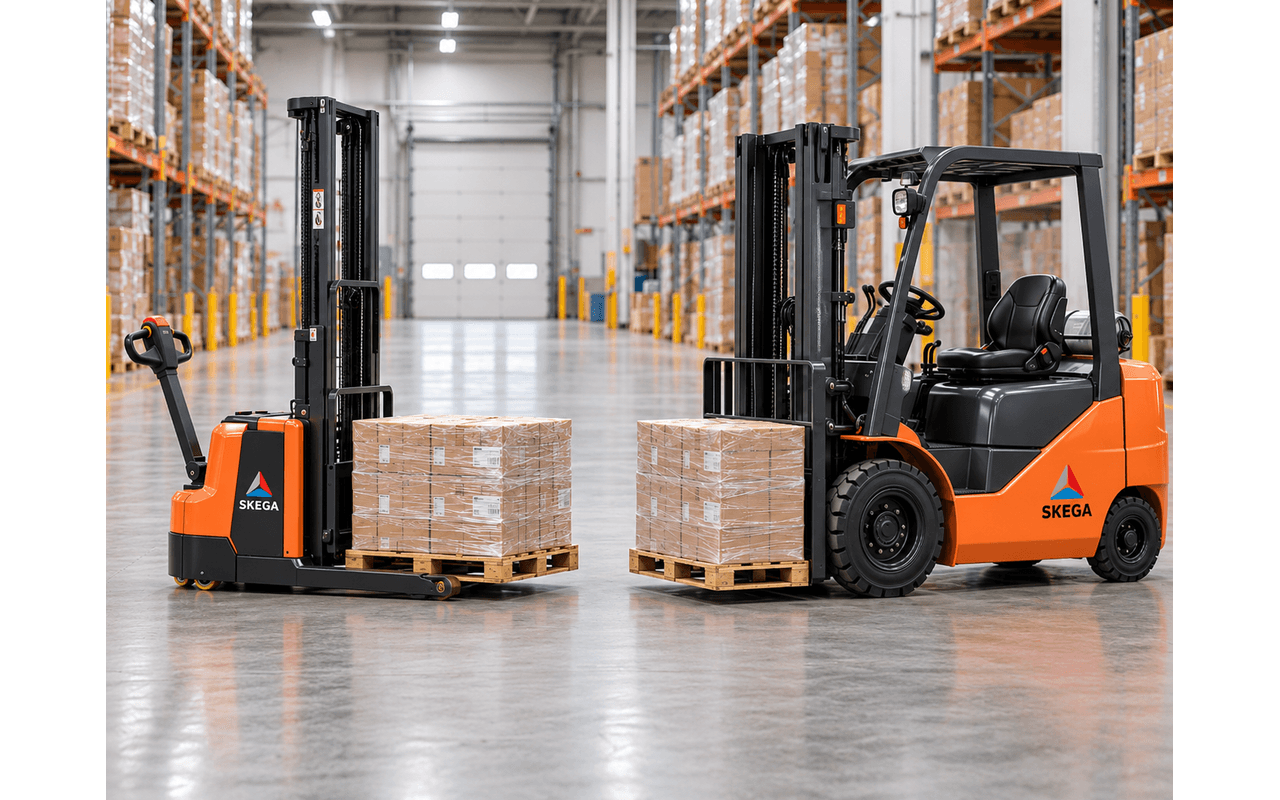
A pallet arrives at your warehouse. It needs to move through a narrow aisle, reach a storage rack and come down again when an order is ready. Simple enough—until the equipment cannot turn with the load or cannot lift its full weight to the required height.
That is why the pallet stacker vs forklift decision deserves more attention than a price comparison. When assessing warehouse material handling solutions, start with your pallets, racks and daily movement pattern. The right machine should fit all three.
This guide explains the differences between stackers and forklifts, common equipment types and the checks that help procurement teams make a practical choice.
Important note: This comparison focuses on common pallet stackers and counterbalance forklifts. Capacity, aisle requirements and suitability vary by model. Confirm your selection against the current load chart, operating manual and actual warehouse conditions
Pallet stacker or forklift—which should you choose?
A pallet stacker may fit indoor rack handling with compatible pallets and manageable travel distances. A counterbalanced forklift may fit broader transport and loading duties. Choose by checking load capacity at height, aisle space, pallet design, floor conditions and workload—not the equipment name alone.
What Is a Pallet Stacker?
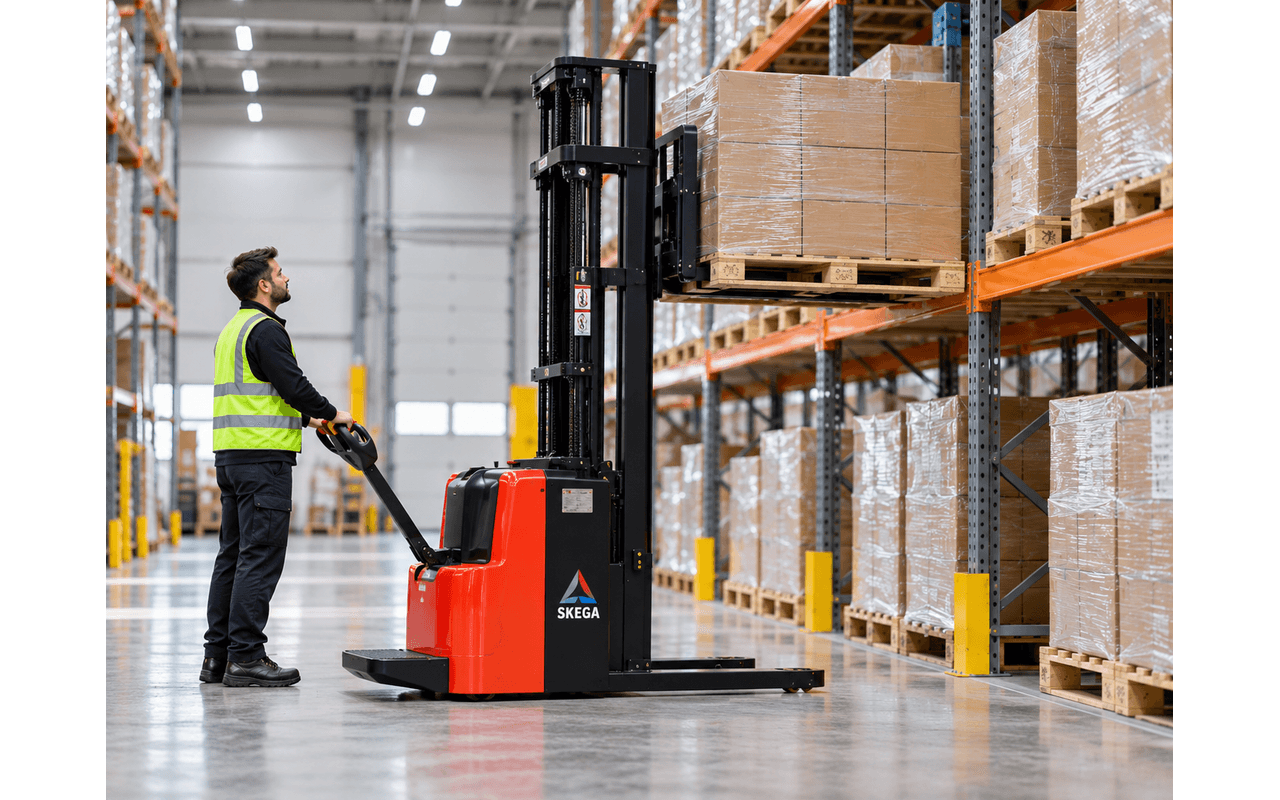
A pallet stacker lifts pallets using forks attached to a mast. Depending on its design, an operator pushes, walks with or rides on the machine while moving loads between storage locations.
Many stackers have support legs extending beneath or around the pallet. These help support the machine but also affect which pallets it can handle and how closely it can approach a rack.
Stackers combine vertical lifting with pallet movement. Their suitability depends on the lifting system, drive arrangement and physical layout.
Common types of stackers
Manual hydraulic stackers: The operator moves the machine manually and uses a hydraulic pump to raise the forks. For occasional lifting over short routes, a hydraulic manual stacker can be worth evaluating, provided the load and physical effort are manageable.
Semi-electric stackers: Some functions are powered while others remain manual. When comparing semi-electric stacker options, ask exactly how lifting and travel work. The name alone does not confirm the configuration.
Fully electric pedestrian stackers: Powered lifting and travel reduce manual effort, with the operator walking alongside or behind the machine.
Platform or ride-on stackers: An operator platform changes how the machine handles travel duties. Check operating space and workload before choosing one.
Straddle and counterbalanced stackers offer different support arrangements. These configurations can matter when conventional support legs interfere with a pallet or rack.
What Is a Forklift?
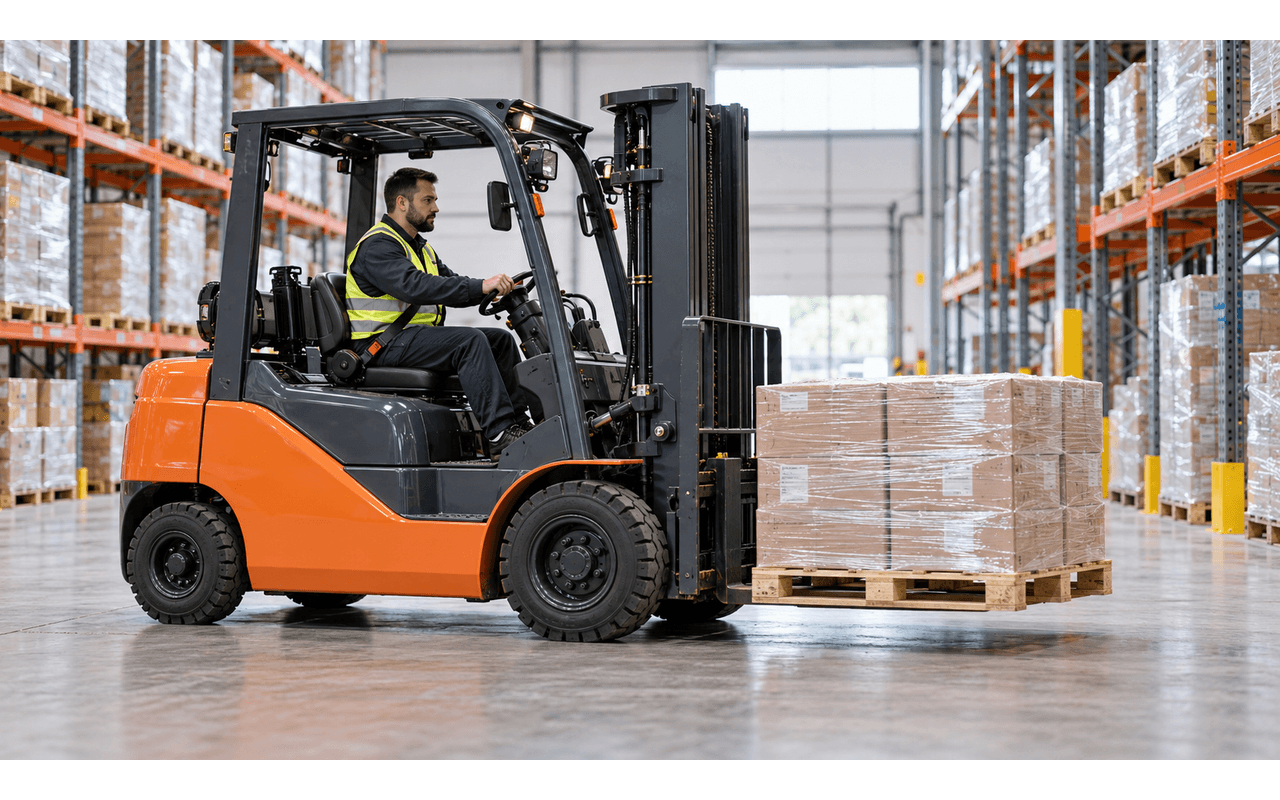
A forklift lifts and transports loads using forks or an approved attachment. In a counterbalance forklift, a counterweight helps balance the load carried at the front.
The operator generally rides on the machine. This arrangement can suit repeated transport, rack handling and vehicle loading, depending on the model and operating conditions.
Common forklift types
Electric counterbalance forklifts use batteries for power. Buyers assessing indoor movement can compare electric forklift options alongside stackers, considering charging arrangements and available space.
Diesel and other internal-combustion forklifts serve different applications. Fuel type, ventilation, tyre selection and environmental suitability need assessment.
Reach trucks and specialised narrow-aisle trucks are additional options for certain storage layouts. A high-rack warehouse may need one of these rather than either machine in a basic stacker-versus-counterbalance comparison.
The useful question is not simply “What types of forklifts exist?” It is “Which configuration can complete our handling tasks?"
Power Options, Training and Maintenance Costs
Compare lifting power and travel power separately
In a manual stacker vs forklift comparison, operator effort is part of the operating cost. Consider how often loads move and whether the task is reasonable throughout the shift.
For electric pallet stacker vs forklift decisions, compare battery type, runtime under your workload, charger compatibility and charging space.
Do not assume a battery will last a full shift from a general product description. Request performance information for the intended duty.
Combustion-powered equipment also needs an assessment of exhaust exposure and ventilation. The UK Health and Safety Executive’s lift-truck guidance highlights adequate ventilation for internal-combustion trucks.
Operator training and safe operation
Compact equipment still needs trained operators and safe working procedures.
Training should cover the specific machine, load limits, controls, visibility, pedestrian interaction and pre-use checks. Operators should understand safe travel and stacking practices in the operating manual.
Supervisors must also check how equipment is used after training. HSE’s operator training guidance discusses monitoring and refresher training where needed.
For Indian facilities, confirm applicable local requirements and employer authorisation procedures. Overseas guidance provides useful safety context but does not establish Indian legal requirements.
Purchase price versus total ownership cost
Compare equipment over the same operating period and workload.
Include purchase price, energy or fuel, battery replacement, servicing, wear parts and downtime. Add operator time where different configurations affect handling effort.
Manual equipment still needs inspections and maintenance. Electric equipment needs attention to batteries, wheels, hydraulics and electrical systems.
Ask about service response, spare-part availability and maintenance schedules. A lower purchase price can lose its advantage if repairs repeatedly interrupt dispatch.
Pallet Stacker vs Forklift: What Differences Matter?
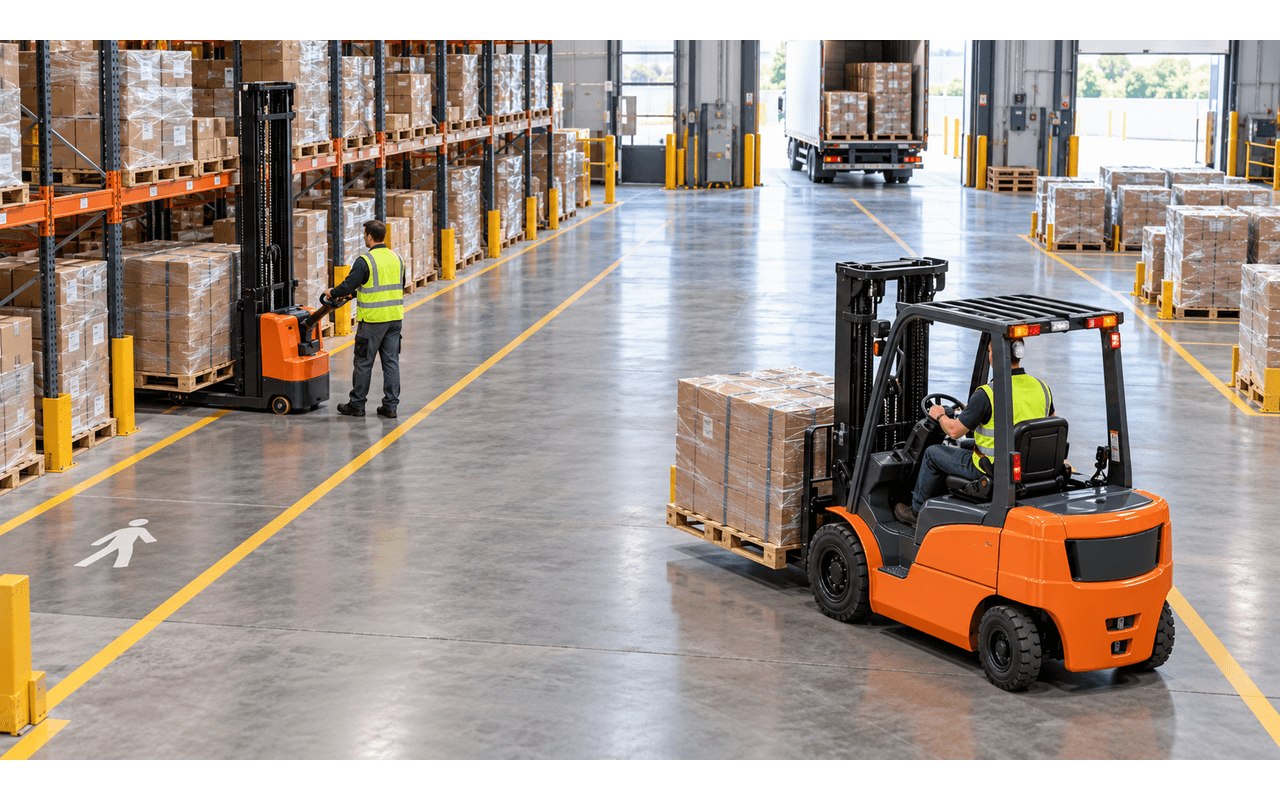
Load capacity and lifting height
Start with the heaviest loaded pallet, including packaging and the pallet itself. Then identify where that load must be placed.
Rated capacity does not necessarily remain available at every lifting height. Load centre—the horizontal distance from the fork face to the load’s centre of gravity—also affects the capacity assessment.
A long or unevenly loaded pallet may differ substantially from the load assumed in the rating. Attachments can change usable capacity too.
For example, SKEGA’s published specifications for the WONT-HFES1533 fully electric battery-operated stacker list 1,500 kg rated capacity and 750 kg capacity at its maximum 3,300 mm height.
Those figures describe that listed model. Confirm the current load chart before ordering or operating it.
Also check the mast’s lowered height, its extended height and clearance beneath doors, beams or services. Equipment must both reach the rack and move through the building.
Aisle width and manoeuvrability
A machine fitting between two racks does not prove it can turn and place a pallet there.
Pallet stacker aisle width requirements depend on the equipment configuration, pallet dimensions, entry direction and load overhang. A platform can also change the operating footprint.
Ask for the working aisle width for your actual pallet. Toyota’s aisle width guide explains the turning space required for a truck carrying a given load.
Do not substitute turning radius or overall machine width for that measurement. Include obstructions, rack protection and the warehouse’s pedestrian arrangements in the assessment.
For a pedestrian stacker vs forklift comparison, a loaded demonstration in the intended aisle is more useful than comparing brochure photographs.
Pallet compatibility and rack access
Pallet compatibility can eliminate an otherwise attractive machine.
Check fork entry height, fork length, adjustable width and the pallet’s bottom construction. Support legs or load wheels may encounter bottom boards on some closed-bottom pallets.
Straddle legs may pass around a pallet, but their width must also fit the storage arrangement. A counterbalanced configuration uses a different approach.
Floor-level rack beams can create another obstruction. Send the supplier photographs and dimensions of both pallets and racks.
A demonstration should include picking up a pallet, travelling with it and placing it at the intended location.
Travel distance and frequency of use
Count pallet movements and measure the route. Include receiving, rack placement, picking and dispatch.
A manual stacker may be workable for occasional short movements but demanding when repeatedly pushed with heavy loads. Powered travel changes that comparison.
Fully electric stackers are not automatically limited to low-volume operations. Their suitability depends on duty rating, travel distance, lifting cycles and battery arrangements.
For longer routes, compare platform stackers and suitable rider-operated forklifts. Assess operator fatigue, safe travel speed and handling time.
Measure a complete cycle. A fast lift offers limited benefit if positioning the machine takes too long.
Floor conditions and operating environment
Inspect the route, including joints, thresholds, debris and loading areas.
Wheel material, ground clearance and permitted gradients affect suitability. Smooth-floor equipment may struggle where surfaces are uneven or damaged.
For outdoor operations, check weather exposure, surface condition and the manufacturer’s limits. A forklift is not automatically suitable for rough terrain simply because it has larger tyres.
Discuss cold stores, wet floors or unusual environments separately. They may require equipment features beyond a standard warehouse specification.
Which Equipment Fits? Practical Warehouse Scenarios
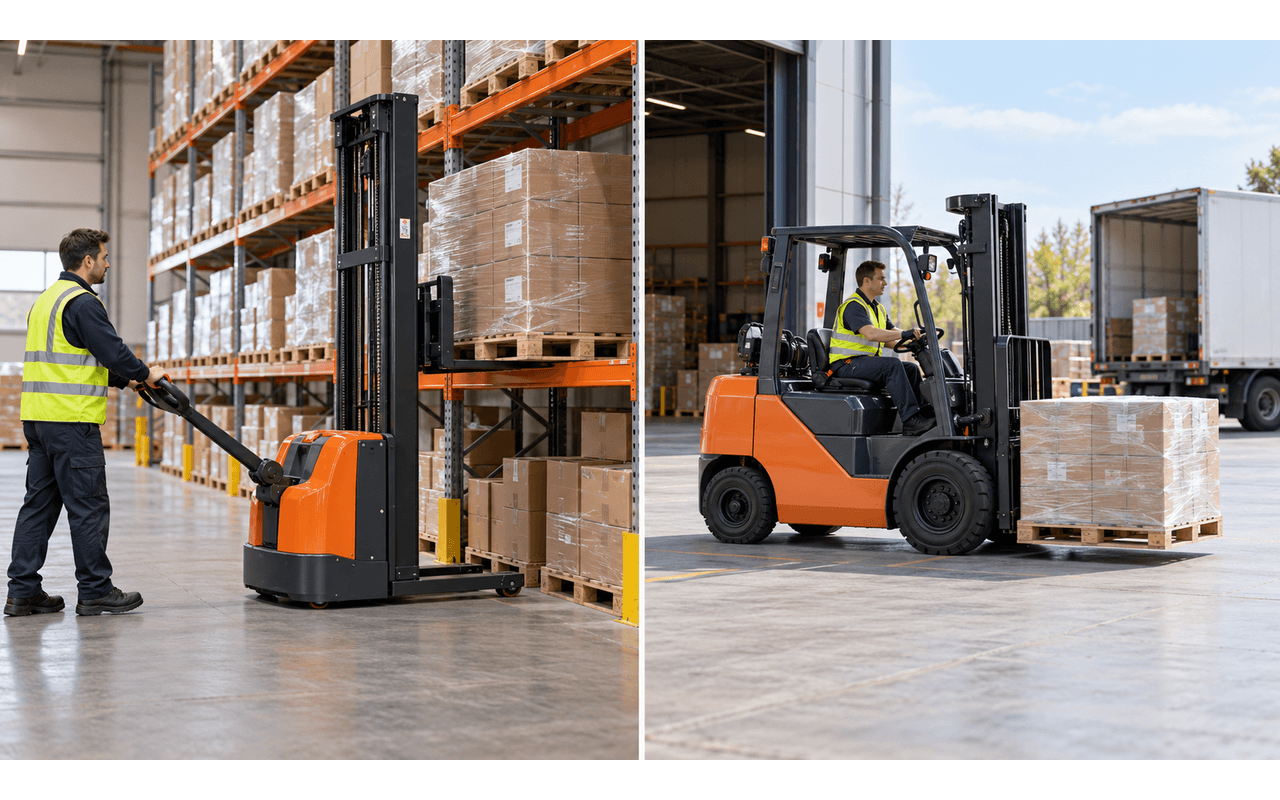
Small indoor warehouse with occasional rack placement
A warehouse receives a few pallets at a time and stores them along short, smooth routes.
A manual or semi-electric stacker may be worth assessing if its capacity at height, pallet compatibility and manual effort are acceptable. A fully electric stacker may be justified when repeated movement makes pushing impractical.
A small floor area alone does not decide the answer.
Busy distribution centre with longer travel routes
Receiving and dispatch continue throughout the shift, with frequent movement between distant locations.
Compare a platform stacker and suitable forklifts against actual throughput, operator workload and charging needs. A stacker may handle storage duties while separate transport equipment moves pallets across the facility.
One machine does not have to perform every task.
Mixed pallets and truck loading
Supplier pallets vary and vehicles arrive with different loading arrangements.
Check support-leg clearance, pallet entry and vehicle access before recommending a stacker. A counterbalance forklift may offer suitable access, but its capacity and operating space still need verification.
Dock plates, ramps and vehicle floors must be suitable for the selected equipment and load.
High racks with restricted aisles
The upper storage levels demand lifting capacity that a shortlisted stacker cannot provide.
Evaluate reach trucks or specialised warehouse trucks as well. Confirm capacity at height, aisle requirements and overhead clearance before comparing price.
Ground-level movement without stacking
The task is moving pallets between production and dispatch without placing them in racks.
A pallet truck may meet the requirement. Reviewing the types of pallet trucks helps distinguish horizontal movement from rack handling. For repeated movement, electric pallet trucks can also be assessed against the route and workload.
Frequently Asked Questions
What is the difference between a pallet stacker and a forklift?
Common pallet stackers use a compact mast-and-fork arrangement, often with support legs and a walking or platform operator. Counterbalance forklifts use a counterweight and typically carry a riding operator. Actual capabilities overlap and depend on configuration.
Is a pallet stacker a forklift?
Terminology varies. Powered stackers belong to the wider lift-truck family and may be described as stacker forklifts. For purchasing, specify the support arrangement, operator position, lifting system and drive system rather than relying on the name.
What is the difference between a pallet jack and a pallet stacker?
A standard pallet jack lifts a pallet just enough for ground-level transport. A pallet stacker has a mast for lifting pallets into storage positions. High-lift working-height pallet trucks should not be assumed suitable for rack stacking.
How much can a pallet stacker lift?
Capacity varies by model, load centre and lifting height. Check the load chart for your heaviest pallet at the highest required placement level. A headline capacity does not confirm what the machine can lift at full height.
Which equipment suits narrow warehouse aisles?
A compact stacker may fit some layouts, while others require a reach truck or specialised narrow-aisle equipment. Compare the specified working aisle width for the actual pallet and load. Machine width alone is insufficient.
Can a pallet stacker handle closed-bottom pallets?
Some configurations can, but conventional support legs and load wheels may interfere with bottom boards. Check the entry direction and pallet construction. Ask the supplier to demonstrate compatibility before purchasing.
When should you choose a forklift over a stacker?
Choose a suitable forklift when it better meets your load, travel, access and loading requirements. Longer routes or varied duties may support that choice, but compare model specifications and operating conditions before deciding.
Discuss Your Warehouse Requirements With SKEGA
The right equipment choice begins with a clear description of the job. Share your maximum pallet weight, rack height, aisle measurements, floor conditions and daily movement pattern when you discuss your warehouse requirements with SKEGA. These details give the team a practical basis for assessing stackers, forklifts and pallet movement options.