Hydraulic vs. Electric Scissor Lifts: Operating Cost Comparison for Indian Industries.
Walk into any Indian factory or warehouse and you'll notice the same pattern a scissor lift gets purchased once, but it gets used for years. And somewhere around year two or three, plant managers start asking a question they probably should have asked before signing the purchase order: is this machine actually costing us more to run than it should?
Walk into any Indian factory or warehouse and you'll notice the same pattern a scissor lift gets purchased once, but it gets used for years. And somewhere around year two or three, plant managers start asking a question they probably should have asked before signing the purchase order: is this machine actually costing us more to run than it should?
For procurement teams, plant heads and warehouse owners, the quotation on day one is only a small part of the real story. Electricity, battery replacement, hydraulic servicing, spare parts, downtime and daily utilisation all add up over the working life of the equipment and they can quietly change what a "cheaper" machine actually costs you in the long run.
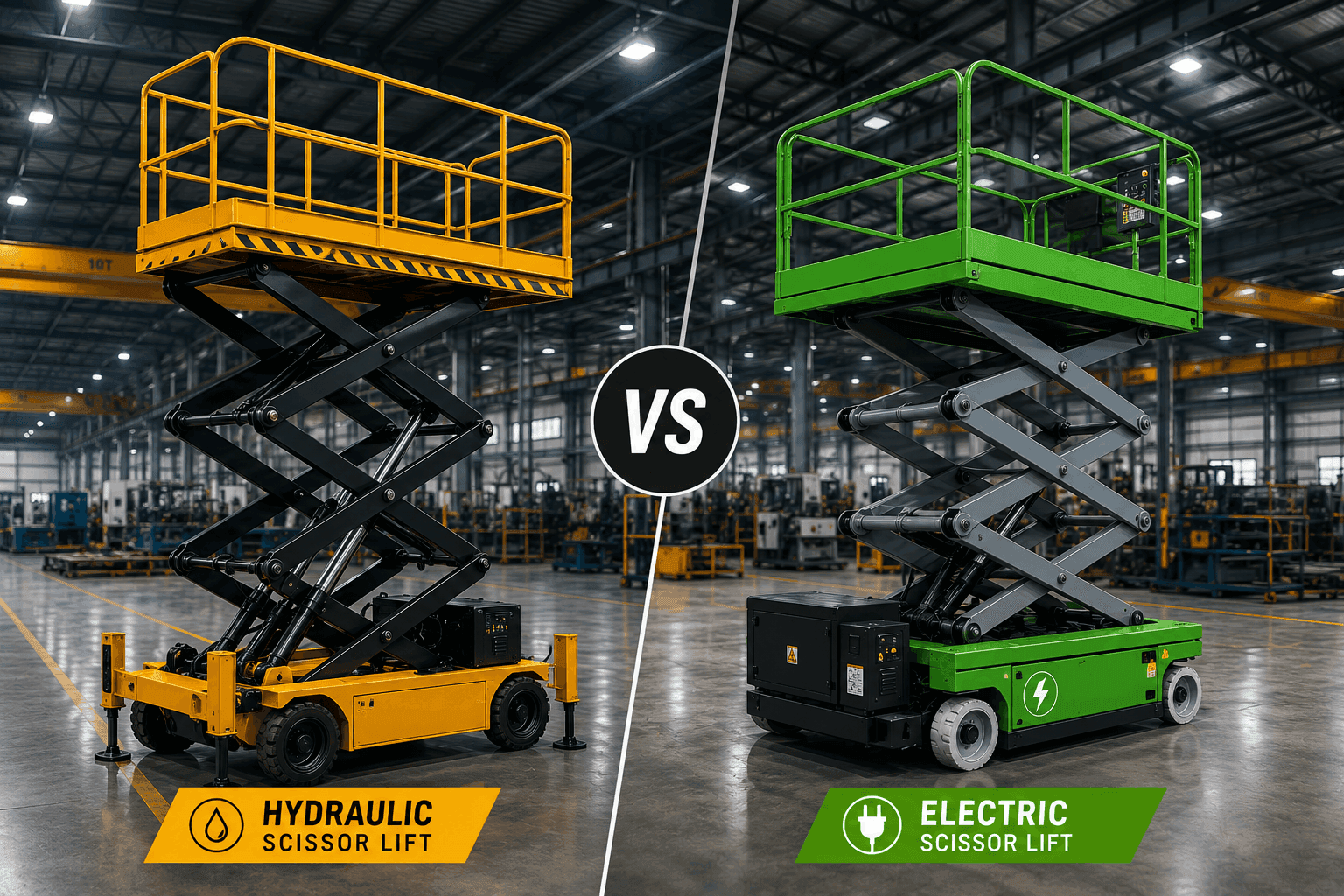
So the real question worth asking is: is a hydraulic scissor lift actually cheaper to operate, or can an electric scissor lift deliver better long-term value for an Indian industrial facility?
To answer that properly, buyers need to look beyond the price tag and compare purchase cost, electricity consumption, battery expenses, hydraulic maintenance, downtime, productivity and expected equipment life together, not in isolation. That's what this guide walks through, so you can decide based on how the equipment will actually perform in your facility, not just how it looks on a quotation. If you're exploring options right now, it also helps to know that a wide range of industrial material handling equipment exists beyond scissor lifts but this comparison stays focused on hydraulic and electric scissor lifts specifically.
Hydraulic vs Electric Scissor LiftQuick Answer
A hydraulic scissor lift can be highly suitable for heavy-duty lifting, fixed workstations and material positioning where the machine largely stays in one place and handles repetitive, heavier loads.
An electric scissor lift, including battery-powered self-propelled systems, tends to work well where regular movement, indoor operations and independent positioning matter more than raw lifting force.
But here's the part buyers often miss: the machine with the lower purchase price is not automatically the machine with the lower long-term cost. The right answer depends on daily operating hours, lifting frequency, load capacity, maintenance requirements, battery replacement, electricity usage, downtime, mobility and expected service life.
In short, there's no single universally "best" option which scissor lift is best for industrial use really comes down to how and where you plan to use it.
Hydraulic vs Electric Scissor Lift at a Glance
Here's a simple side-by-side view before we go deeper into each factor:
| Factor | Hydraulic Scissor Lift | Electric Scissor Lift |
| Initial Investment | Application-dependent | Application-dependent |
| Power System | Hydraulic mechanism | Electric/battery-powered system |
| Daily Operating Cost | Depends on configuration and use | Depends on charging and use |
| Maintenance | Hydraulic system maintenance | Battery/electrical maintenance |
| Heavy Load Handling | Suitable for many heavy-duty applications | Depends on model and capacity |
| Indoor Use | Suitable | Highly suitable in many applications |
| Mobility | Model-dependent | Strong in self-propelled models |
| Noise | Model-dependent | Often preferred for indoor operations |
| Downtime Risk | Hydraulic component related | Battery/electrical component related |
| Best Use | Heavy material positioning | Frequent access and mobility |
What Is a Hydraulic Scissor Lift?
 A hydraulic scissor lift uses a hydraulic cylinder to generate pressure, which drives the criss-crossing scissor mechanism and raises the platform smoothly and steadily. Because the lifting force comes from hydraulic pressure rather than a purely mechanical or electric drive, these systems can typically be configured for heavier loads and controlled, precise elevation useful for teams that need stable positioning rather than fast movement. Depending on the load, platform size and application, hydraulic lifting systems can be built as fixed installations, mobile units, or portable tables each suited to a different kind of industrial task.
Where Are Hydraulic Scissor Lifts Commonly Used?
You'll typically find hydraulic scissor lifts working in factories, assembly lines, warehouses, loading areas, maintenance departments and manufacturing facilities anywhere consistent, controlled material positioning matters more than constant repositioning.
For facilities that need movable hydraulic lifting for shifting materials between work areas, a portable hydraulic scissor table offers a different kind of flexibility compared to permanently installed lifting system.
On the other hand, for fixed industrial applications like loading docks or dedicated assembly stationsan electro-hydraulic pit-mounted scissor table is often a better fit, since it's built into the workspace itself rather than being moved around.
What Is an Electric Scissor Lift?
An electric scissor lift draws its power from a battery or electric drive system rather than relying purely on a hydraulic pump. It's worth being clear here: "electric scissor lift" doesn't always mean the machine has no hydraulic componentsmany electrically powered lifts actually use electro-hydraulic mechanisms, where electricity drives the hydraulic system rather than replacing it. So it's less about "electric vs hydraulic" as opposing technologies, and more about how the power is delivered and how the machine moves. What typically sets electric and self-propelled models apart is charging-based operation, operator-friendly controls and suitability for indoor environments where noise and emissions matter.
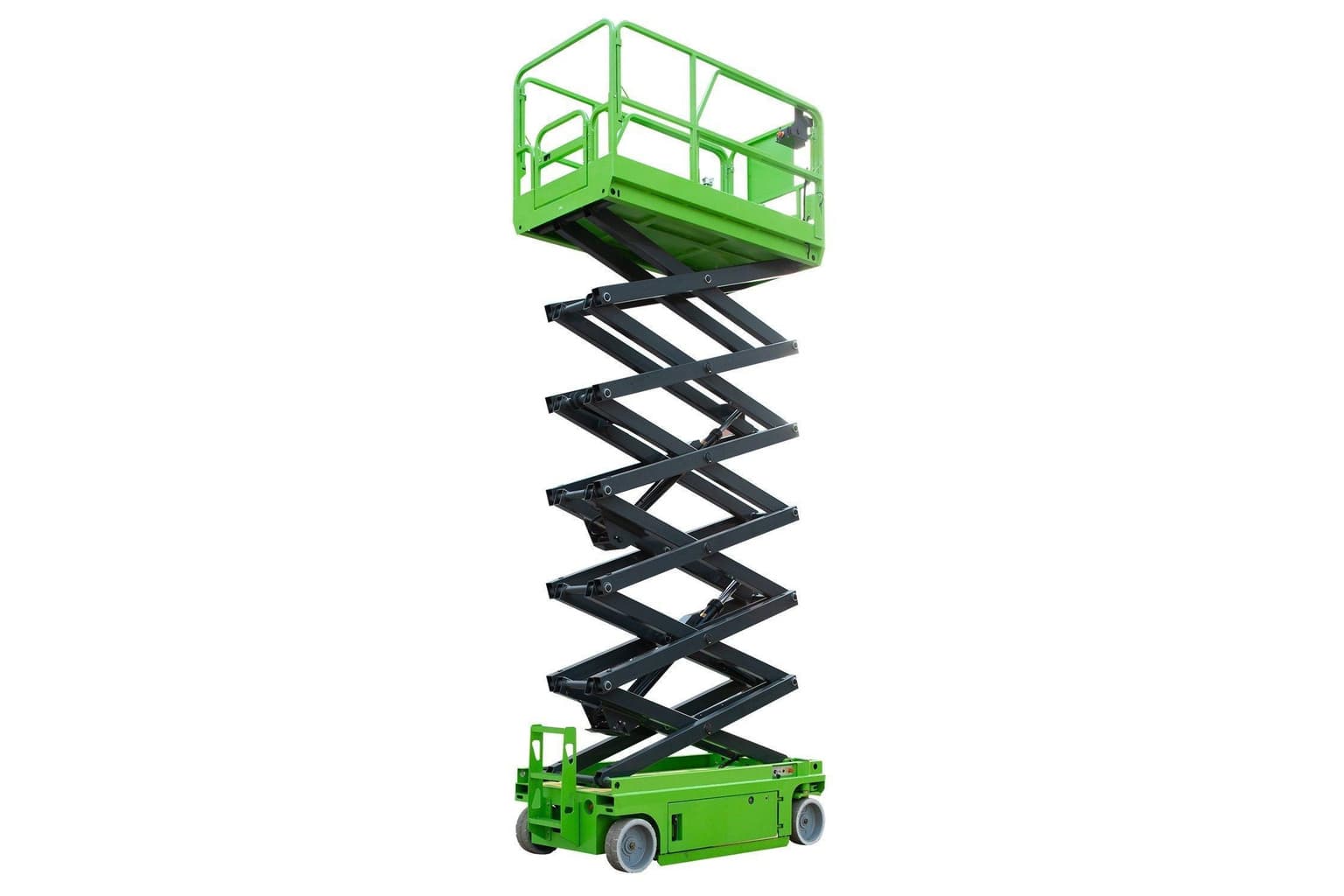
Battery Operated and Self-Propelled Scissor Lifts
A battery operated scissor lift and a self propelled scissor lift are closely related, the battery powers the lift, and the self-propelled function lets the operator move the machine independently without needing a tow vehicle or manual repositioning. This combination is especially useful in facilities where a mobile scissor lift needs to travel between multiple work locations in a single shift.
If your operations involve frequent repositioning across a warehouse or production floor, a self propelled scissor lift is generally built for exactly that kind of use.
Hydraulic vs Electric Scissor Lift Price in India
It's tempting to look for a single number when searching for scissor lift price in India, but price varies significantly depending on specification and configuration. A number quoted without context isn't particularly useful to a serious buyer.
Factors Affecting Hydraulic Scissor Lift Price in India
The hydraulic scissor lift price in India typically depends on load capacity, platform dimensions, lifting height, hydraulic configuration, whether the unit is fixed or mobile, the number of scissor stages, safety equipment, customisation requirements and the type of controls used.
Factors Affecting Electric Scissor Lift Price in India
Similarly, electric scissor lift price in India depends on battery capacity, working height, drive system, platform dimensions, charging technology, controls, tyre type, safety systems and whether the unit offers self-propelled capability.
If your requirement is short-term or project-based rather than continuous, it's also worth reading about electric scissor lift rent vs buying before finalising a purchase decision, sometimes renting makes more financial sense than ownership, depending on how frequently the equipment will actually be used.
What Really Determines Scissor Lift Operating Cost?
Purchase price is really just the starting line. The real cost of operating a scissor lift in India builds up over time through electricity, battery maintenance and replacement, hydraulic oil and components, spare parts, labour, preventive maintenance, repairs, downtime, operator productivity and overall equipment service life. This is exactly why two machines with very different purchase prices can end up with surprisingly similar or surprisingly ownership costs after a few years. A cheaper machine that breaks down often, or a pricier machine that runs reliably for a decade, can both change the math significantly.
Electricity and Energy Cost Comparison
Energy cost for an electric scissor lift depends on several variables: operating hours, lifting cycles, battery size, motor capacity, load, charging frequency, operating environment and overall machine efficiency. Because these variables differ so much from one facility to another, it's not accurate to claim that electric scissor lifts always cost a fixed percentage less to operate than hydraulic ones. The best way to estimate scissor lift operating cost for your facility is to look at your actual duty cycle rather than relying on generic industry claims.
Hydraulic Scissor Lift Maintenance Cost
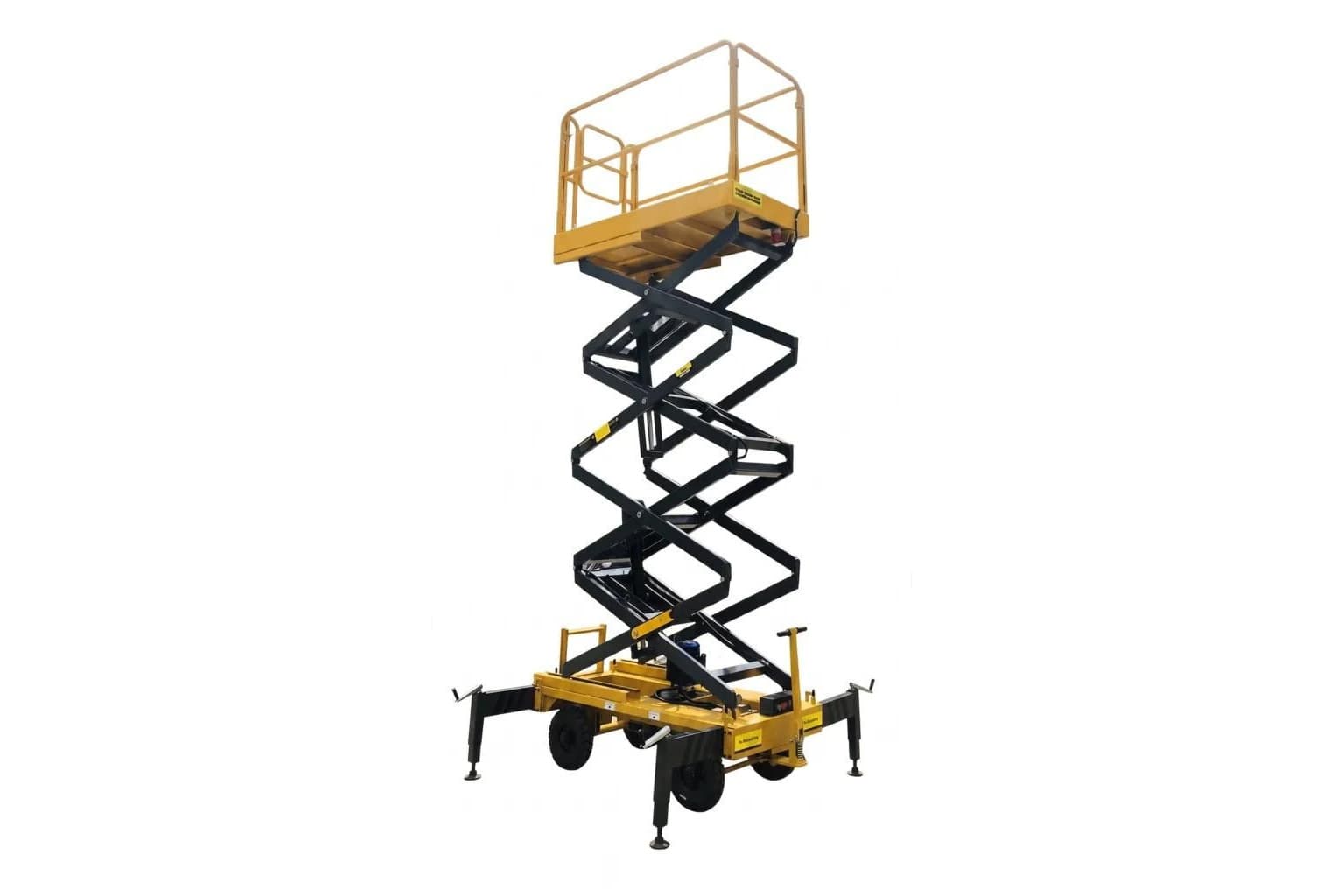
Common Hydraulic Maintenance Areas
Hydraulic systems typically need regular attention to hydraulic oil levels and condition, hoses, seals, cylinders, valves, and general lubrication and fittings. Routine oil leakage inspection and preventive servicing go a long way in avoiding sudden breakdowns that halt production. Scheduled inspection is really the key variable here; a well-maintained hydraulic system tends to run predictably, while a neglected one is far more likely to surprise you with an unplanned stoppage right when you need the machine most.
If you'd rather not manage this in-house, professional material handling equipment services can help keep hydraulic components inspected and serviced on schedule, reducing the chances of costly downtime.
Electric Scissor Lift Maintenance Cost
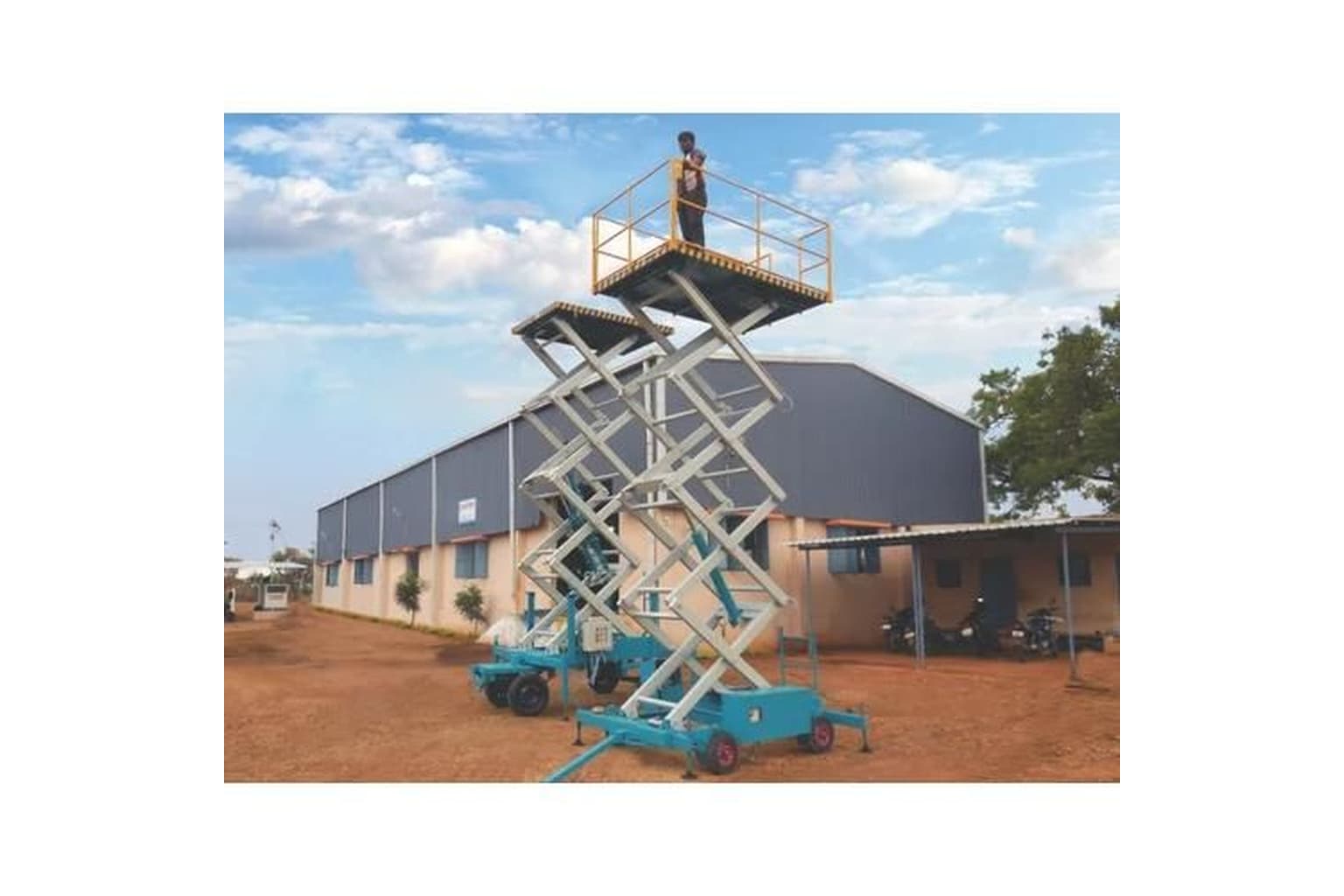
Common Electric Scissor Lift Maintenance Areas
For electric and battery-powered systems, the areas that typically need regular attention include battery health, the charging system, wiring, electrical controls, the drive system, motor, connectors, tyres, brakes and safety controls. Battery replacement is one factor that can influence long-term ownership expenditure, though the exact timeline depends heavily on usage patterns, charging discipline and the specific battery technology used best checked against the exact equipment specification rather than assumed as a fixed number.
Battery Replacement vs Hydraulic System Maintenance
Putting both maintenance profiles side by side makes the comparison easier to visualise:
Electric/battery-powered equipment may need attention to:
- Battery condition
- Charging behaviour
- Charger components
- Electrical connections
- Motor and drive components
Hydraulic equipment may need attention to:
- Hydraulic oil
- Hoses
- Seals
- Valves
- Cylinders
- Leak inspection
The important takeaway here is that neither maintenance profile is automatically "cheaper" in every scenario. The more economical option really depends on how heavily, how often and in what environment the machine operates.
Scissor Lift Total Cost of Ownership
A simple way to think about long-term cost is:
Total Cost of Ownership = Purchase Price + Energy Cost + Maintenance + Replacement Parts + Downtime + Major Replacement Costs
This is why it makes sense to evaluate equipment over three, five, or more years rather than comparing quotations alone. Factors worth weighing include the initial investment, frequency of use, planned servicing, energy expenditure, component replacement, downtime, productivity impact and expected useful life. Working out the full scissor lift total cost of ownership takes a bit more effort than comparing two prices, but it's the only way to know which machine genuinely fits your budget over its working life.
Which Scissor Lift Is Better for Warehouses?
For warehouse environments, the deciding factors usually include indoor movement, aisle width, floor conditions, noise, charging availability, platform height, load requirement, travel distance and how frequently the operator needs to reposition the machine. Self-propelled equipment tends to work well where operators move between multiple locations through a shift, since it removes the need for manual towing between tasksa strong option for the best scissor lift for warehouse in India where mobility matters as much as lifting capability.
Which Scissor Lift Is Better for Factories?
Factory environments bring a different set of prioritiesproduction-line work, machine maintenance access, material positioning, repetitive lifting, fixed installation requirements, and handling heavy components at dedicated workstations. For facilities focused on consistent, structured operations, material handling solutions for manufacturing are typically designed around these repetitive, heavy-duty requirements rather than constant mobility.
When the requirement involves moving heavier loads across a factory floor rather than keeping the lift fixed in one place, a mobile multi-scissor lift table offers a practical middle ground between fixed hydraulic stations and fully self-propelled electric units.
When Should You Choose a Hydraulic Scissor Lift?
A hydraulic system tends to make sense when heavy loads are involved, the equipment stays primarily in one area, precise height positioning matters, repetitive lifting is required, the platform needs customisation, or the operation calls for rugged, heavy-duty performance.
When Should You Choose an Electric Scissor Lift?
An electric or battery-powered system tends to be a better fit when frequent movement is required, the equipment operates mainly indoors, self-propelled movement adds value, the operator regularly changes locations, charging infrastructure is available, and manoeuvrability matters more than raw lifting force.
7 Questions to Ask Before Buying a Scissor Lift
- What load capacity do you actually need?
- What working or lifting height is required?
- How many hours will the equipment operate each day?
- Will it remain stationary or move frequently across the facility?
- Will it operate indoors, outdoors, or both?
- What preventive maintenance will realistically be required?
- What will the equipment cost to own over several years, not just on day one?
Reliable scissor lift manufacturers in India should walk you through these questions and recommend equipment based on your application, required capacity, height and working environment not simply steer you toward the lowest sticker price.
Hydraulic vs Electric Scissor LiftWhich Offers Better ROI?
Return on investment isn't just about purchase price. It's shaped by productivity, maintenance, energy cost, replacement components, downtime, service support, expected service life and labour efficiency working together. There's no universal winner here, and any guide that claims otherwise is oversimplifying a genuinely nuanced decision. The better investment is not necessarily the scissor lift with the lowest quotation, it is the machine that performs the required work reliably while maintaining a manageable total cost throughout its service life.
Final VerdictHydraulic or Electric Scissor Lift?
Bringing it all together, the right choice depends on your application, required capacity, operating frequency, work environment, mobility needs, maintenance capacity, available energy source, downtime tolerance and total ownership cost not on which technology sounds more modern or more traditional.
Before comparing only the scissor lift price in India, take a step back and assess how the equipment will actually operate inside your facility day after day. The right scissor lift should support safer handling, smoother workflows and reliable long-term performance. If you're still weighing your options, browsing SKEGA's full range of material handling equipment in India is a useful next step to compare specifications before making a final call.
Frequently Asked Questions
Q-1 Which is better, hydraulic or electric scissor lift?
A. It depends on application, mobility needs, load capacity, duty cycle and long-term ownership cost. Hydraulic systems often suit heavy, fixed-position lifting, while electric and self-propelled systems suit frequent indoor movement neither is universally better.
Q-2 What is the scissor lift price in India?
A. Price varies based on lifting capacity, height, platform dimensions, drive system, battery specification, hydraulic configuration, controls and customisation, so it's best evaluated against your specific requirement.
Q-3 Is an electric scissor lift cheaper to operate?
A. It depends on operating hours, charging cost, battery condition, maintenance needs and machine configuration there's no fixed percentage that applies across every facility.
Q-4 What is the maintenance cost of a hydraulic scissor lift?
A. It typically includes hydraulic oil, hoses, seals, cylinders, valves, labour and preventive servicing, with costs varying based on usage intensity and upkeep.
Q-5 Which scissor lift is best for industrial use?
A. The right choice depends on load requirements, working height, environment, mobility needs, frequency of use and total ownership cost rather than one technology being universally superior.
Q-6 Which scissor lift is best for warehouses?
A. Mobile, battery-operated and self-propelled configurations are often well suited to warehouses, particularly where operators need to reposition equipment frequently across aisles and storage area.
Q:7 How long does a scissor lift battery last?
A. Battery life depends on battery technology, charging habits, operating cycles, load and maintenance, so it's best confirmed against the exact equipment specification.
Q-8 What factors affect scissor lift operating cost?
A. Electricity, charging behaviour, battery replacement, maintenance, hydraulic components, spare parts, labour, downtime and overall utilisation all contribute to the real, ongoing cost of running a scissor lift.