How to Choose a Scissor Lift for Factory Maintenance: A Practical Buyer's Guide.
Picture a Tuesday morning in your plant. A light fitting has failed above a conveyor. Someone drags out a ladder, another person holds it, and a third finds a safety belt that may or may not be on date. The repair takes 20 minutes. Getting ready takes an hour. And everyone is a little nervous.
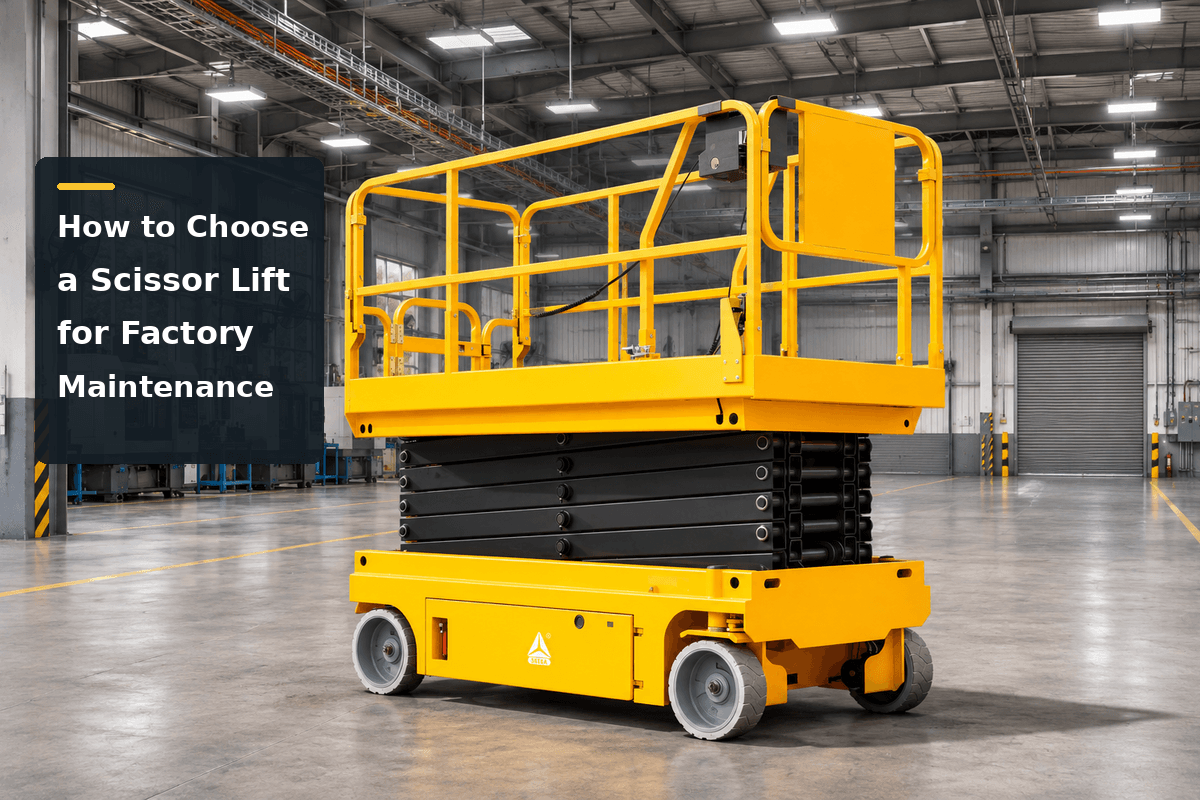
Picture a Tuesday morning in your plant. A light fitting has failed above a conveyor. Someone drags out a ladder, another person holds it, and a third finds a safety belt that may or may not be on date. The repair takes 20 minutes. Getting ready takes an hour. And everyone is a little nervous.
This is why more plants now keep a scissor lift for factory work: a platform that rises straight up on crossed steel arms, so technicians can work at height safely and with both hands free. But the market is confusing. Some lifts carry people, some carry pallets, and the names sound alike. Skega builds both kinds in Surat, so our scissor lift and height access range is a good place to see the options while you read.
This guide keeps it simple. By the end, you will know which type to pick, how to size it and what to check before you buy.
Key Takeaways
- A scissor lift for people (aerial) and a scissor lift table (for loads) are different machines.
- For recurring maintenance at height, a self-propelled electric lift is usually the safest fit indoors.
- Always add up people, tools and materials to find the load you needs.
- Working height is higher than platform height. Read the spec sheet carefully.
- Check floor, aisle width and doors before you order, not after delivery.
- Daily inspection and regular servicing matter as much as the purchase.
What Is a Scissor Lift, and Which One Does Your Factory Need?
A scissor lift is a work platform that goes straight up and down on crossed, folding steel arms. An industrial scissor lift is built for factory use, with strong frames, safety devices and rated loads for daily duty.
Here is where people get confused. Two different machines share the name:
| Aerial scissor lift | Scissor lift table | |
| What it lifts | People, tools and light materials | Loads such as pallets and heavy parts |
| Typical use | Maintenance, inspection, painting, installation | Pallet loading, assembly, packaging lines |
| Move around? | Often self-propelled | Fixed, pit-mounted or on wheels |
| Best for | Overhead work | Bringing work to a comfortable height |
In most factories you may need both. Maintenance teams use the aerial type. Production and dispatch teams use the table type.
Types of Scissor Lifts Used in Factories
There are two main types: aerial scissor lifts for lifting people, and scissor lift tables for lifting loads. Within each, you choose by power source, mobility and how the lift is installed.
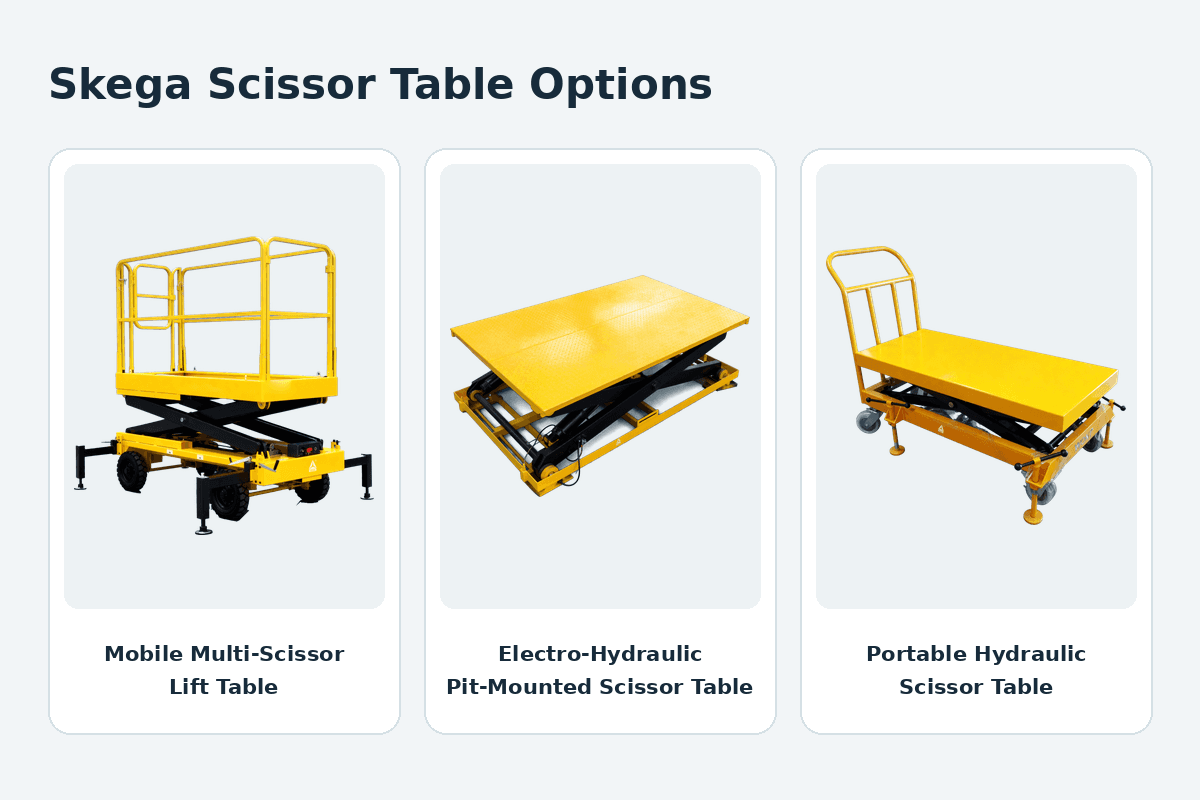
Self-propelled scissor lift. It drives itself to the job, so one operator can move it from bay to bay. This is the usual choice for overhead maintenance. Skega's self-propelled scissor lift is built to order in Surat.
Mobile and portable scissor tables. These sit on wheels and move between stations. A portable hydraulic scissor table is a manual, wheel-mounted option, while the mobile multi-scissor lift table is electro-hydraulic and works on a 3-phase supply.
Pit-mounted scissor tables. The platform sits flush with the floor when lowered, so pallets roll straight on. See the electro-hydraulic pit-mounted scissor table.
On power: hydraulic and electro-hydraulic lifts are common in factories. Electric models are quiet and have no exhaust, which suits indoor work. Diesel lifts exist, but they are mostly used outdoors.
How Does a Hydraulic Scissor Lift Work?
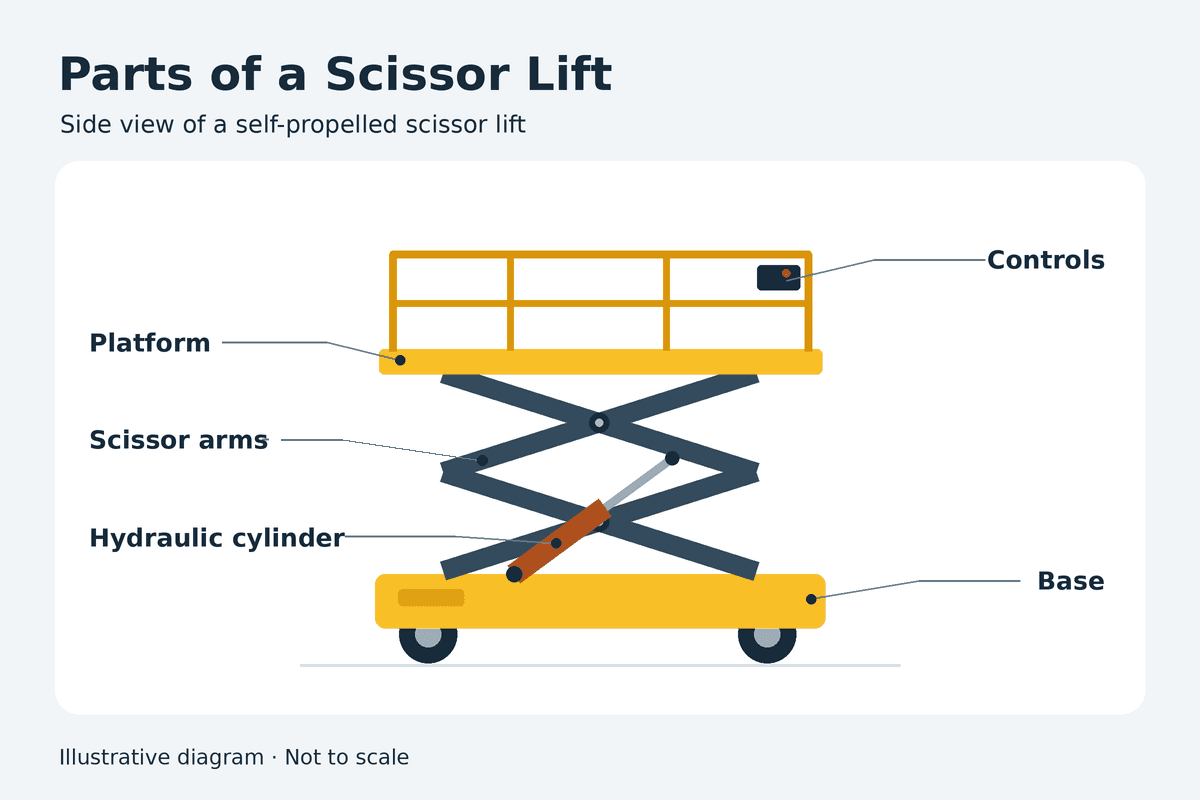
A hydraulic scissor lift uses oil pressure to push a cylinder. The cylinder pushes the crossed arms outward at the bottom, which makes the platform rise. Releasing the oil lets the platform come down smoothly.
The main parts are simple:
- Base frame: carries the weight and keeps the lift stable.
- Scissor arms: fold and open as the lift moves.
- Hydraulic cylinder and pump: create the lifting force.
- Platform: where people or loads sit, often with rails.
- Controls and safety devices: emergency stop, lowering valve and overload protection.
How to Choose a Scissor Lift for Factory Use: 8-Point Checklist
To choose a scissor lift for factory use, match the load, height, platform size, power source and floor to the real job. Then check that the lift fits your aisles and doors. Work through these eight points.
1. Load capacity. Add up everyone and everything on the platform. For example, two technicians at 80 kg each, 40 kg of tools and 50 kg of light fittings make about 250 kg. Pick a model rated comfortably above that, and never go over the rated load. As we explain in our guide to choosing the right scissor lift for your warehouse, multi-scissor tables can handle 2,000 kg and more, while self-propelled lifts are built for reach, up to 14 metres and beyond.
2. Platform size. Check that people and materials fit without crowding. A bigger platform helps, but it needs wider aisles.
3. Lift height. Know the difference between two numbers. Platform height is how high the deck rises. Working height is how high a person can reach from the deck, and it is usually about two metres more. Measure the highest point you must reach, then compare against the working height on the spec sheet. Confirm the figure with the manufacturer.
4. Power source. Electric suits indoor maintenance. Hydraulic and electro-hydraulic suit tables. Manual suits light, occasional use.
5. Floor condition. Check for slopes, cracks, drains and soft patches. Lifts need firm, level ground.
6. Aisle and door clearance. Measure the narrowest aisle, doorway and the tallest overhead obstruction. Include turning space, as our blog on forklift turning radius explains for layout planning.
7. Environment. Wet, dusty or food-grade areas may need special finishes or stainless steel.
8. Budget and ownership cost. Think about service, spares and downtime, not only the price.
Scissor Lifts for Factory Maintenance
For factory maintenance, an electric self-propelled scissor lift is usually the best fit indoors. It is quiet, has no exhaust fumes, and one person can drive it to the work area. It replaces ladders and makeshift platforms.
Typical jobs include:
- Changing and cleaning lights
- Servicing ducting, pipes and sprinklers
- Checking cranes, gantries and cable trays
- Repairing conveyors and overhead equipment
- Painting and building repairs
In narrow aisles, a compact model is the safer choice. Before you order, measure the machine's width and the aisle width, and leave room on both sides. If the lift will be used often, read our safety checklist for operating self-propelled scissor lifts and share it with your operators.
Scissor Lift Tables for Assembly, Loading and Packaging Lines
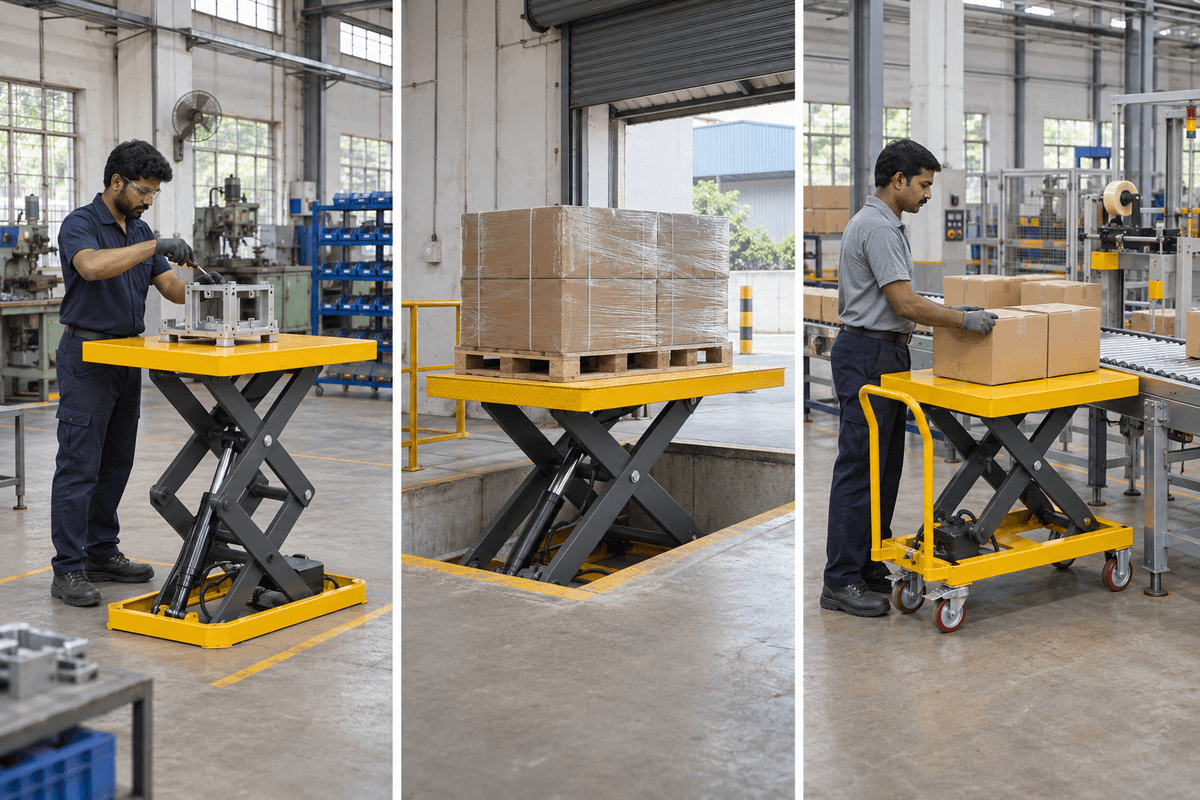
A scissor lift table brings the work to the worker, instead of making the worker bend or climb. It cuts back strain and speeds up repeat tasks.
- Pallet loading: A pit-mounted table lets a pallet truck roll on and off at floor level, then raises the load to the right height.
- Assembly work: Heavy parts can be raised to waist or eye level. Our blog on why multi-scissor lift tables are essential for heavy equipment manufacturing shows how one part can be worked on at three different heights.
- Packaging lines: Match the table's top height to the conveyor. Leave a small, even gap and use rollers if cartons slide across.
For a pit, plan the depth, drainage and edge protection with the supplier before civil work starts. Also keep loads centred on the platform. Uneven loading is a common cause of wear and tilt.
When choosing between sizes, a 500 kg table suits lighter cartons and parts. A 1 tonne table is better when full pallets are common. Always include the pallet's own weight.
Safety Features and Inspection Checklist
Working at height is a safety topic, so do not treat this section as optional. Look for these features when you buy:
| Feature | Why it matters |
| Emergency stop | Cuts power at once |
| Emergency lowering | Brings the platform down if power fails |
| Overload protection | Warns or stops when the load is too high |
| Guardrails and gate | Keep people on the platform |
| Tilt alarm | Warns on uneven ground |
| Safety props | Hold the platform up during servicing |
| Pothole guards | Help prevent tipping |
Servicing: Follow your manufacturer's schedule for hydraulic oil, seals, hoses, pins, bushes and lubrication. Keep a service log. Strange noises, slow lifting or drifting down are signs to stop and call for service.
This guide is general. Follow the manufacturer's manual and the safety rules that apply to your factory.
What Affects the Cost of an Industrial Scissor Lift?
Price depends on the job, so a fair quote needs details. These are the main cost drivers:
- Capacity and height: More load and more reach need stronger steel and bigger cylinders.
- Platform size: A larger deck costs more.
- Power source: Electric and electro-hydraulic systems cost more than manual ones.
- Customisation: Special sizes, rollers or pit work add cost.
- Material and finish: Stainless steel for food or wet areas costs more than mild steel.
- Extra safety options: Alarms, sensors and covers add to the price.
To get an accurate quote, share your load, height, platform size, location and whether the lift will be used indoors or outdoors.
How to Choose a Scissor Lift Manufacturer in India
A good manufacturer does more than sell a machine. Ask about in-house manufacturing, a site survey before design, load testing, genuine spares, service support and warranty. Ask whether the lift can be built to your floor, aisle and height. During a demo, check lifting smoothness, control response, emergency lowering and how the machine handles your actual aisle.
Skega has over 10 years of experience, has delivered 150+ projects across 12 industries, and builds every unit at GIDC Sachin, Surat. If you are in Gujarat, a nearby maker makes surveys and service faster. You can read about Skega or see our services.
FAQs
Q:1 What is an industrial scissor lift?
It is a strongly built platform that lifts straight up on crossed arms. Factories use it for maintenance, assembly, loading and inspection.
Q:2 What are the two types of scissor lifts?
A - Aerial scissor lifts raise people. Scissor lift tables raise loads such as pallets and heavy parts.
Q:3 How much can a scissor lift lift?
A- It depends on the model. Scissor tables can lift thousands of kilograms, while aerial lifts have lower loads but more height. Always check the rated capacity.
Q:4 What is the difference between working height and platform height?
A - Platform height is the deck height. Working height adds the reach of the person standing on it.
Q:6 Should a factory rent or buy a scissor lift?
A- Rent for short projects. Buy if you use it every week, since you can also order the size and features you need.
Conclusion
The best scissor lift for factory maintenance is the one that fits your tasks, your floor and your aisles. Work out your load and height, choose the right type, and plan inspection from day one. A good lift pays back in safer repairs and less lost time.
Not sure which size or type you need? Tell us your load, height and location, and we will help you size it. Talk to the Skega team.